Boosting Governance: Key for Hong Kong to Use AI Safely
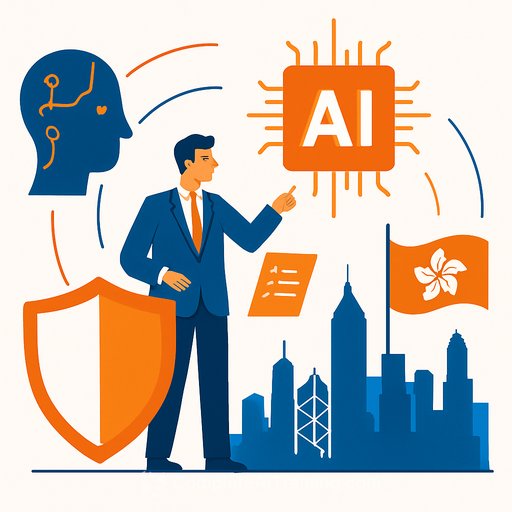
As artificial intelligence (AI) becomes increasingly integrated into daily work and personal life, concerns about its risks are also rising. Strengthening governance is essential for Hong Kong to manage AI safely and responsibly. Experts emphasize the need for a unified regulatory standard with clear risk classifications, strong privacy protections, and transparency. Establishing a dedicated AI oversight body would position Hong Kong as a leader in responsible AI development.
AI is becoming as essential as electricity or running water in many workplaces. Yet, a survey by the University of Melbourne and KPMG, covering 48,000 people across 47 countries, revealed worrying complacency. Two-thirds of users rely on AI outputs without verifying accuracy, and over half reported work errors caused by AI. Nearly half admitted to uploading sensitive company data to public AI platforms like ChatGPT. Despite widespread use, less than half fully trust AI systems, highlighting the need for a solid corporate governance framework. Without it, trust could erode, innovation may slow, investments could decline, and talent might leave.
Why Governance Matters for Hong Kong
Good AI governance at the corporate level enhances competitiveness. At the government level, it attracts investments, solidifies Hong Kong’s reputation as a reliable AI hub, and prepares society for collective AI readiness. Hong Kong’s common law system, strong financial regulatory expertise, and extensive cross-border knowledge exchanges are advantages it can leverage.
To catch up, Hong Kong should develop a comprehensive AI blueprint. This includes bringing technical experts into regulatory agencies, increasing public engagement on AI ethics, and creating a cross-border governance framework within the Guangdong-Hong Kong-Macao Greater Bay Area.
A Multifaceted Approach to AI Governance
Experts agree Hong Kong needs progress in four key areas: regulation, risk classification, privacy protection, and transparency.
- Regulation: Currently, there is no dedicated AI legislation. Existing laws on data protection, intellectual property, anti-discrimination, and cybersecurity apply by default. Concerns remain about whether intellectual property laws adequately cover AI-generated works. A standalone AI ordinance based on accountability, traceability, fairness, ethical practice, privacy, safety, and human oversight is recommended. This legislation should be people-focused to reduce AI biases but also flexible enough to encourage industry growth.
- Risk Classification: Hong Kong adopts a risk-based approach, requiring mitigation measures proportional to the risk level. For high-risk AI systems, especially those significantly impacting individuals, a human-in-the-loop approach is advised to maintain human control over decisions and reduce errors.
- Privacy Protection: AI often uses publicly available data, including personal information, which conflicts with data minimization principles. When users unintentionally input personal data into AI models, this data becomes embedded and difficult to erase. Given Hong Kong’s largely open data environment and minimal cross-border restrictions, a rigorous risk management framework is essential to prevent privacy violations and deepfake-related crimes.
- Transparency: Clear guidelines and consistent legislation help companies plan AI deployment effectively. Coordination among the Digital Policy Office, Privacy Commissioner, Hong Kong Monetary Authority, and Securities and Futures Commission is necessary to close regulatory gaps.
Experts suggest establishing a dedicated AI regulatory body composed of government regulators, industry leaders, academics, cybersecurity experts, public representatives, and legal professionals. This body would provide a consistent framework and detailed procedures for AI governance, allowing risk-based management and international alignment.
Additionally, proposals include setting up an AI policy office and possibly an AI court to handle legal disputes related to AI technology. Recently, the Commerce and Economic Development Bureau and Intellectual Property Department proposed amending the Copyright Ordinance to allow reasonable use of copyrighted works for AI training, encouraging both international and local AI companies to operate and expand from Hong Kong.
Recent Developments in AI Governance
The Digital Policy Office released the Hong Kong Generative AI Technical and Application Guideline to tackle risks like data leakage, bias, and misinformation. The Ethical AI Framework requires government agencies to incorporate ethical considerations when adopting AI or big data projects. The Privacy Commissioner published a Model Personal Data Protection Framework to guide organizations in responsibly handling personal data in AI systems.
Bridging Global AI Standards
There is no global consensus on AI governance standards yet. Hong Kong can play an active role by engaging with international organizations such as the OECD and United Nations. Promoting AI conferences locally and leveraging regional mechanisms like the Asian-African Legal Consultative Organization can help build consensus, especially with Global South countries.
Hong Kong's legal experts are versed in common law, continental law, and Islamic legal systems, positioning the city well to draft internationally recognized AI regulations. Combining Western technological frameworks with Chinese regulatory standards, Hong Kong could influence global AI governance effectively.
Conclusion
For legal professionals in Hong Kong, the call is clear: a unified, transparent, and risk-based AI governance framework is essential. Establishing a dedicated regulatory body and refining legislation will build trust, attract investment, and ensure that AI benefits society without compromising privacy or ethical standards. Hong Kong’s unique strengths make it an ideal candidate to lead in responsible AI governance.
For those interested in furthering their understanding of AI governance and compliance, exploring specialized courses on Complete AI Training can provide valuable insights tailored for legal professionals.
Your membership also unlocks: