AI As a Learning Buddy: Practical Ways Educators Can Use It Now
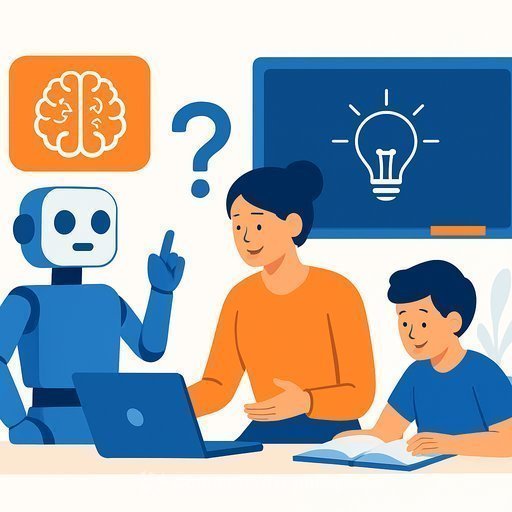
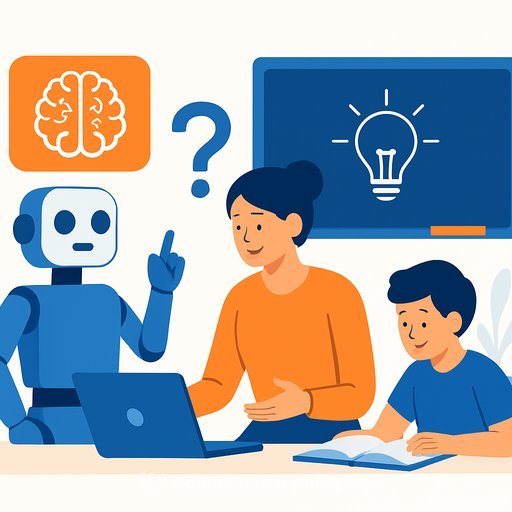
March 2026. A simple idea is changing how classrooms work: treat AI like a learning buddy that grows with students. Not a magic box. A partner that learns through interaction, feedback, and shared problem-solving.
That's the core of Wanli Xing's work at the University of Miami, where he studies how student-tutor interactions shift when AI matures alongside the learner. The goal is clear: better engagement, clearer thinking, and stronger results across K-12 and higher ed.
Why "learning buddy" beats "AI tutor"
Old-school educational AI was rule-driven. It felt mechanical and easy to spot. Large language models changed the picture by making AI more conversational and context-aware.
In this model, the student and AI both ask for help. The AI supports problem-solving, and the student strengthens their grasp by teaching concepts back to the AI. That loop builds confidence and keeps attention where it matters-on reasoning, not just answers.
Flip the script: students teach the AI
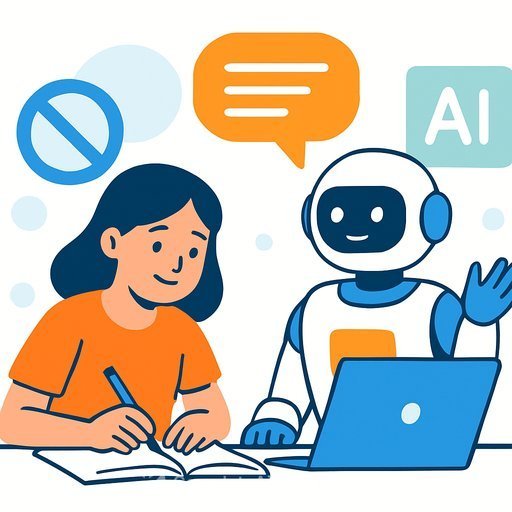
Learning by teaching has always worked. Now it scales. Students explain a concept to their AI buddy, correct its gaps, and refine their own thinking in the process.
This approach is especially useful in STEM, where misconceptions stack quickly. The AI becomes a second teacher in the room, but students still do the heavy lifting-explaining, checking, and improving.
Xing's current research tracks
- Create classroom-ready AI tools and run design-build-test cycles for K-12 and higher education.
- Use learning analytics to study patterns across platforms and identify behaviors that lead to stronger engagement and outcomes.
- Prepare the future workforce: help undergraduates build skills in AI, data science, quantum computing, and semiconductors.
Practical moves you can try this month
- Set up "teach-the-AI" tasks: students explain each step of a problem, then ask the AI to critique gaps or edge cases.
- Use metacognitive prompts: "Quiz me on concept X, then ask me to teach it back in my own words."
- Review interaction logs (with consent): look for where students hesitate, over-rely on hints, or skip reasoning.
- Grade the teaching, not the tool: include clarity, step-by-step reasoning, error-spotting, and revision quality in your rubric.
- Pair AI with peer talk: AI for draft thinking, peers for debate, you for feedback on process and accuracy.
- Set guardrails: clarify citation rules, require reasoning traces, and use age-appropriate content filters.
- Build staff capacity: run short workshops and share playbooks. For a structured path, see the AI Learning Path for Teachers.
Data, ethics, and media literacy
There's a flood of education data. The win comes from asking sharper questions: Which behaviors predict better engagement? Which supports move the needle for different students?
Policy matters too. Xing points to recent moves like Australia's under-16 social media ban and argues for content standards plus a moderate approach. Media literacy-and now AI literacy-should be core skills for teens as they enter college and work.
We need clearer rules and shared standards
Right now, a few tech companies set most of the defaults for how AI behaves. That raises transparency, ethics, and accountability concerns. Xing suggests a "United Nations for AI" to bring more voices to the table.
Early-stage tech always lacks clean rules. The answer isn't retreat-it's thoughtful trials, strong safeguards, and open research that schools can trust.
Communities and references
If you're building policy or curriculum, plug into expert groups shaping practice and standards. Try the IEEE for ethics and technical guidance and the Society for Learning Analytics Research (SoLAR) for evidence-based methods.
Key takeaways for educators
- Treat AI as a learning buddy that co-develops with students.
- Make students teach the AI to strengthen reasoning and retention.
- Use data to refine prompts, supports, and assessment-not to micromanage.
- Invest in AI literacy and clear classroom norms before scaling tools.
- Push for transparency and shared standards while you pilot responsibly.
The throughline: keep humans in charge of thinking, and use AI to make that thinking visible. That's how classrooms get better-one interaction at a time.
Your membership also unlocks: