
AI news ·
Studies show reliance on AI tools degrades skills among physicians and software engineers
Two studies document skill erosion in physicians and engineers using AI. Endoscopists' unaided adenoma detection rate dropped from 28.4% to 22.4% after 3 months with an AI tool.
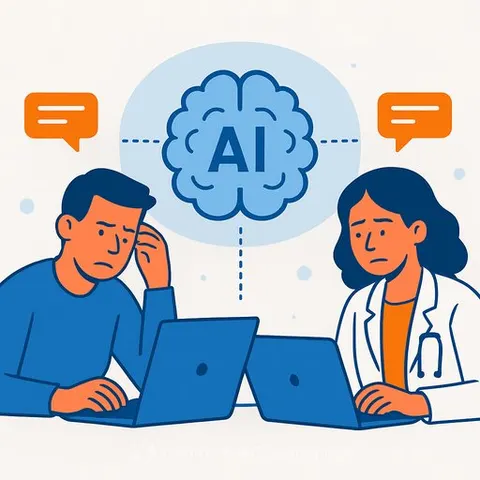
Two recent studies have documented measurable skill erosion among physicians and software engineers who use artificial intelligence tools in their work, raising concerns that professional expertise built over years can degrade within months of AI adoption. The findings arrive as 77% of physicians and 70% of nurses say they worry about losing skills because of over-reliance on AI systems, according to a U.S. survey published this month.
Researchers are now grappling with a practical question that cuts across medicine, computer science, accounting, and law: how to preserve hard-won human judgment when AI can perform core tasks faster. "Just being aware that this phenomenon exists hopefully provokes some self-reflection about which skills people want to maintain and which they're willing to outsource" to AI tools, said Kevin Crowston, an information scientist at Syracuse University.
What happened when AI was taken away from specialists
A study of endoscopy physicians in Poland - all of whom had performed at least 2,000 colonoscopies over their careers - tracked what happened when an AI system that flags precancerous lesions called adenomas was made available on some days but not others. Before the AI tool was introduced, the specialists detected at least one adenoma in 28.4% of colonoscopies during a three-month period. After they began using the tool, their unaided detection rate dropped to 22.4% over the next three months.
The study, published last October in The Lancet Gastroenterology and Hepatology, suggests that even highly skilled professionals can lose ground on tasks their jobs demand. The authors wrote that continuous exposure to such tools can cause clinicians to become "less motivated, less focused, and less responsible when making cognitive decisions without AI assistance."
Robert Wachter, a physician at the University of California, San Francisco and author of a book on AI in health care, said the findings show how dependency shifts performance. Co-author Yuichi Mori, a physician-researcher at the University of Oslo, added that no established fix exists. "There is no established solution against deskilling right now. It should be a very hot research topic in the next decade," Mori said. For science and research professionals working with clinical AI systems, these dynamics are directly relevant to AI for Healthcare training and practice.
Software engineers and the learning gap
Computer science is producing similar signals. Researchers at the AI firm Anthropic designed a randomized controlled trial in which 52 software engineers completed a basic coding task - all with web access and instructions, but only half prompted to use an AI assistant. When all participants took a quiz afterward about what they had learned, the AI-assisted group averaged 50% compared to 67% for the unassisted group. Those who used AI performed especially poorly on questions requiring them to diagnose errors in the code.
The findings, posted on arXiv ahead of peer review, highlight what Crowston calls "a very odd disconnect between performance and learning." He said, "People can perform at a pretty high level, because they're borrowing skills from the AI, but they are not developing those skills themselves." The pattern matters acutely for early-career developers and students who may never build foundational understanding if AI fills the gap.
Cognition on loan
Other technologies have displaced specific skills before - GPS navigation weakened people's ability to navigate without assistance, and automated accounting systems caused some accountants to forget routine tasks when the software was removed, according to a 2018 study by Tapani Rinta-Kahila, an information-systems researcher at the Hanken School of Economics in Helsinki. But generative AI represents something different. Rinta-Kahila described it as "the first technology that automates various cognitive faculties around thinking and interpretation, which were long considered unique human skills."
He anticipates that AI systems will reshape knowledge-intensive professions as they absorb tasks once performed by junior practitioners. "Next generations of programmers may not understand the foundations of coding that well at all, if they lack the hands-on experience," Rinta-Kahila said. "The same goes for many other knowledge-intensive professions, such as accounting and law." His prescription: professionals must know how much they are offloading, understand how generative AI models actually work, and avoid accepting AI outputs without scrutiny. "People need to manage the competing dynamics of relying on generative AI and staying mindfully vigilant."
Why this matters for science and research professionals
Deskilling is not a future hypothetical - it is showing up now in controlled studies, across disciplines, with effect sizes large enough to raise alarms. For researchers and science professionals who train for years to develop diagnostic, analytical, or technical judgment, the risk is that AI assistance quietly erodes the very skills that justify their expertise. The evidence points toward a deliberate strategy: decide which skills you are willing to lose and which you must protect through deliberate practice without AI help. As these studies make clear, the default is atrophy. Reversing it requires active choices - ones the tools themselves will not make for you.