State Agencies Find Chatbots Shift Work, Not Always Reduce It
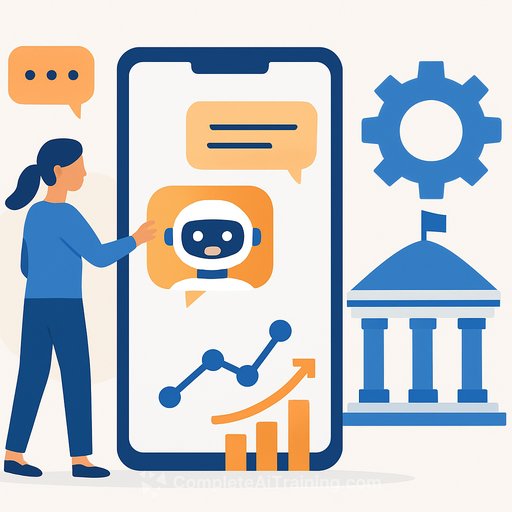
Researchers from the University at Albany's Center for Technology in Government interviewed officials from 22 state agencies to examine what chatbots actually accomplish in government operations. The study, published in Public Performance & Management Review, found that agencies use these tools primarily to answer routine questions-freeing staff to handle complex cases that require human judgment.
But the impact on overall workload remains murky. Some agencies reported fewer calls and emails. Others simply saw demand move to different channels, making it hard to measure concrete gains.
Chatbots as Data Sources
The more consistent finding involves how agencies learn from chatbot interactions. By analyzing what questions people ask and which terms they use, organizations are identifying gaps in their information and clarity.
Several agencies revised website content and changed how they present information based on these patterns. The data also revealed gaps between official government terminology and the language the public actually uses when searching for help.
"Chatbots are not just service tools, they are also learning tools for organizations," said Mila Gasco-Hernandez, research director at the center. "They help agencies better understand what people are looking for and how they are asking for it."
Access and Response Times Improve
Chatbots provide immediate answers, reducing delays from email or phone exchanges. They also serve users outside standard business hours and offer an alternative for people who prefer searching independently.
Agencies treat chatbots as an addition to existing channels, not a replacement. Phone lines and email remain available while the chatbot handles routine inquiries.
Long-Term Effects Still Unclear
Because most chatbot initiatives are recent, the study found limited evidence of lasting impact. The observed changes are short- and medium-term: improved processes, faster responses, and broader access to information.
As agencies expand chatbot use across more programs and services, the technology is likely to play a growing role in how governments communicate with the public.
Learn more: AI for Government and AI for Customer Support resources for government professionals.
Your membership also unlocks: