
AI news ·
Study shows artificial intelligence modeled after deceased loved ones provides emotional comfort
A CU Boulder study found AI models simulating deceased relatives offer emotional closure. All 16 participants preferred first-person chats matching the deceased's speech patterns.
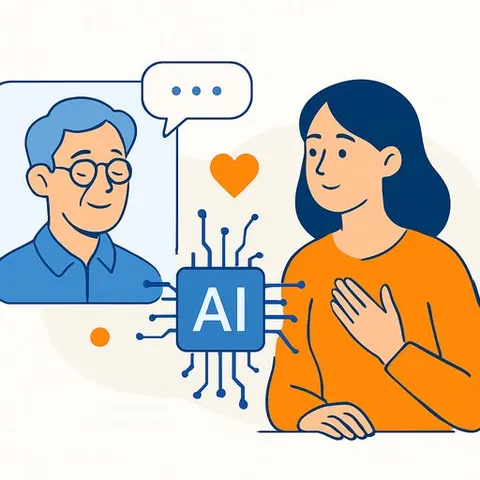
Conversations with AI models that simulate deceased relatives can offer emotional closure, according to a study from the University of Colorado Boulder. Sixteen participants, aged 22 to 50, interacted with systems built from personal data such as text messages, voice recordings, and photos, and most described the experience as surprisingly positive-contradicting researchers' initial expectations that the encounters would feel unsettling.
The systems, which researchers call generative ghosts, rely on Generative AI and LLM technologies to produce text-based conversations, synthesized speech, or even holographic representations. Platforms like Project December, Séance AI, and HereAfterAI already offer such services. One participant said a conversation with an AI modeled after her late grandmother gave her "a sense of emotional closure she had never experienced before."
How the study worked
Researchers created two versions of the AI for each participant. One spoke in the first person, mimicking the deceased directly, while the other described the person in the third person. The participants talked online about a lost relative or friend, and the models were built in real time from the information they provided. Study lead Jack Manning said he expected discomfort, but "most described them as a surprisingly positive experience."
What made the interactions feel authentic
Participants strongly preferred the first-person version, which created a stronger sense of presence. They accepted factual errors or invented details if the AI replicated the person's speech patterns, expressions, and personality convincingly. When the model used words or a tone that clashed with the deceased's known character, the feeling of authenticity broke down. Short sentences, natural wording, and even emojis outperformed long, formal replies. Every participant said they would use such technology again.
Concerns and next steps
Most participants worried about the psychological vulnerability of people in severe grief using these systems without professional support. The researchers plan to conduct the next phase in collaboration with mental health professionals, part of a growing effort to apply rigorous scientific methods to AI for Science & Research. The goal is to assess both benefits and risks of prolonged use so that responsible design and evidence guide the technology's development. Although commercial platforms already have real users, the study emphasizes that further research must define safe limits.
Why this matters for science and research professionals
This study is among the first to empirically test human responses to AI grief tools, moving beyond speculation to collect behavioral data. For researchers, it highlights how user acceptance can hinge on conversational style rather than factual accuracy-a finding with implications for designing any interactive AI system. The planned collaboration with mental health professionals also signals a shift toward interdisciplinary evaluation of AI's psychological impact, an approach that will require controlled experiments, longitudinal data, and ethical frameworks still in early stages.