Law school clinic deploys AI to speed uncontested divorces
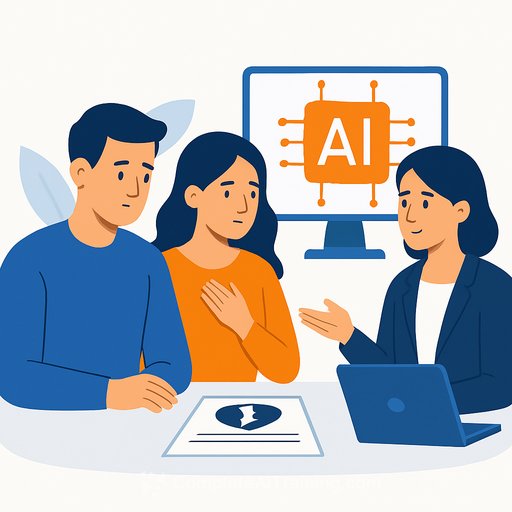
Suffolk University Law School's Online Dispute Resolution Innovation Clinic has launched an AI platform designed to help people without lawyers complete uncontested and low-conflict divorces. The system generates court-ready separation agreements and financial statements, addressing a bottleneck where incomplete paperwork forces parties to return to court multiple times.
The clinic customized technology from the American Arbitration Association to meet Massachusetts Probate & Family Court filing standards. The platform guides users through drafting separation agreements, ensuring proper formatting, and assembling required documentation.
Retired Judge John D. Casey, who directs the clinic, observed the problem firsthand during his tenure as chief of the Probate Court from 2018 until his retirement last year. Court staff spend thousands of hours helping people complete forms correctly, he said.
How the platform works
The system asks users basic questions in plain language, then automatically calculates figures and populates them into court-approved financial statements and divorce complaints. Information entered once transfers across the platform, eliminating duplicate data entry.
"Even a short form financial statement for someone making less than $75,000 a year can be really complicated," Casey said. "The students have been averaging three to four hours just to fill out a simple form for one of the parties."
The clinic's two law students from Suffolk's Legal Information & Technology Lab built the guided interview system. The platform can eventually enable parties to file documents directly with the court electronically.
Scope and replication
The clinic launched in 2024 as a partnership between Suffolk Law and the AAA. Casey said the goal is to create a model that works across Massachusetts and can be replicated nationwide.
The platform currently handles separation agreements, financial statements, and divorce complaints. The clinic plans to expand it to cover separate support petitions and potentially guardianship petitions.
Casey and his students will discuss the tools' courthouse application at a June 12 conference.
For legal professionals interested in how AI applies to document automation and legal processes, explore AI for Legal or the AI Learning Path for Paralegals.
Your membership also unlocks: