Anthropic throws shade at ads as it doubles down on enterprise AI
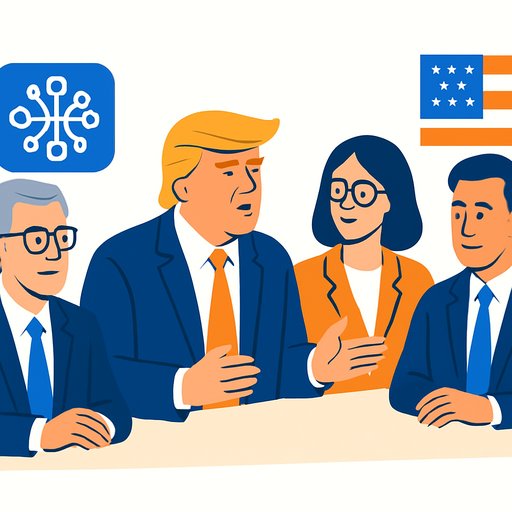
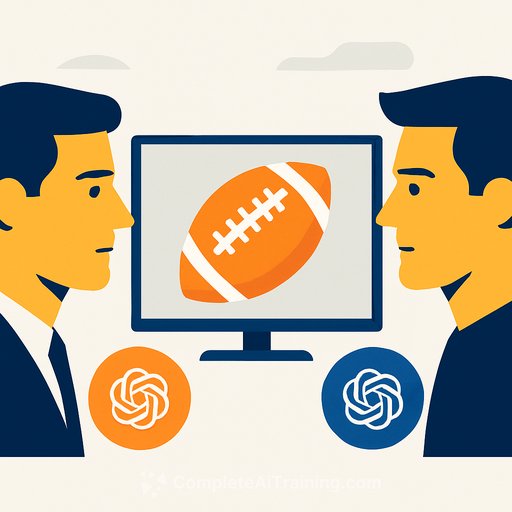
Anthropic's Head of Business, Paul Smith, used the Super Bowl spotlight to draw a line: no ads in Claude, and no chasing headlines. The company ran a 60-second pre-game spot and a 30-second in-game ad with a clear message-ads may come to AI, but not to Claude. OpenAI's Sam Altman pushed back, calling the ad "pretty funny" but "clearly dishonest." The subtext is obvious: different incentives, different customers.
Why this matters for enterprise leaders
- Incentives shape behavior: An advertising model pushes for engagement and clicks. An enterprise model pushes for accuracy, control, and outcomes. Smith's point: ads send optimization in the wrong direction.
- Fewer conflicts of interest: Anthropic says it isn't competing with partners for traffic or ad revenue, which simplifies channel strategy and data governance.
- Focus: Smith frames the core bet as model quality, effectiveness, and deep enterprise integration-not audience scale.
The ad battle is really a strategy battle
OpenAI is still the default consumer brand with ChatGPT. Anthropic is staking its ground in B2B, courting enterprises that want consistency, control, and vendor alignment. Sunday's ads weren't about comedy. They were a positioning move.
Spending philosophies: headline deals vs. disciplined capacity
OpenAI has talked up enormous infrastructure commitments through partnerships-multi-company, multi-billion-dollar figures that raise the ceiling on potential compute. Anthropic, by contrast, committed $50B for U.S. data centers while continuing to source capacity from hyperscalers like Microsoft and Google.
Smith's stance: avoid splashy pre-buys, keep spend tied to demand, and scale "just the right amount of compute" to protect growth without waste or shortages. CEO Dario Amodei has echoed a similar "do more with less" mindset on spend discipline.
- Procurement approach: Anthropic says it's not pre-purchasing compute; instead it's pacing capacity with bookings and pipeline.
- Risk trade-off: Less pre-buy means lower stranded-cost risk but tighter capacity planning. Anthropic says demand remains strong and more infra news is coming.
Products and pipeline: Claude Code and Claude Cowork
Smith highlighted strong growth in two enterprise tools-Claude Code and Claude Cowork. After Claude Cowork gained traction, software stocks sold off on fears of app displacement. Smith called the market reaction "exaggerated."
His view: many existing applications remain essential thanks to specific data models and workflows. Some organizations will double down on their current stack; others will consolidate around AI-first tools. Expect a mixed reality-not a clean swap.
Go-to-market clarity
- Anthropic focus: Enterprise sales, integration depth, and model performance.
- OpenAI focus: Mass consumer reach, plus a growing enterprise motion.
- Channel message: Anthropic says it isn't competing with partners for ads or traffic, which could matter for SIs, MSPs, and data platform alliances.
What to watch next
- Capacity announcements: Anthropic says more infra updates are imminent. Watch for multi-cloud distribution, latency targets, and dedicated tenancy options.
- Enterprise control plane: Admin, compliance, observability, and data residency will decide large deals more than model demos.
- Pricing strategy: How Anthropic prices sustained usage for agents, coding, and knowledge workflows will impact TCO calculations.
- Partner ecosystem: New alliances (e.g., with firms like Man Group) signal where verticalization and co-development are headed.
Decision checklist for CIOs, CTOs, and COOs
- Incentive alignment: Is your vendor monetizing attention or outcomes?
- Capacity realism: Do compute plans match your growth, seasonality, and data residency needs?
- TCO under load: Compare cost for long-running agents, context-heavy workflows, and peak demand-beyond headline token rates.
- Security and governance: Data isolation, audit trails, red-teaming depth, and incident response maturity.
- Integration depth: Connectors to your stack (code repos, BI, CRM, ERP, data lakes) and quality of retrieval and grounding.
- SLA clarity: Latency, throughput, uptime guarantees, and support escalation paths.
- Exit options: Portability of prompts, embeddings, and app logic to avoid lock-in.
Bottom line
This isn't just an ad spat. It's a split-screen: consumer scale vs. enterprise discipline. If your priority is control, predictable performance, and fewer incentive conflicts, Anthropic's stance will resonate. If your priority is broad reach and a familiar end-user brand, OpenAI remains compelling.
Either way, scrutinize incentives, capacity plans, and integration depth before you commit.
Further reading and training
Your membership also unlocks: