Super Bowl Sentiment: Are AI-Heavy Ads Hurting Brand Perception?
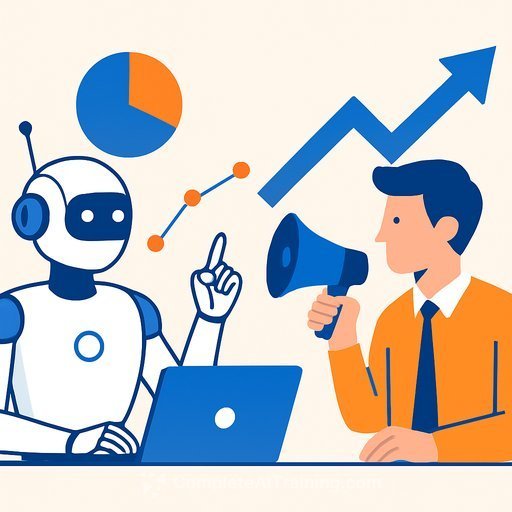
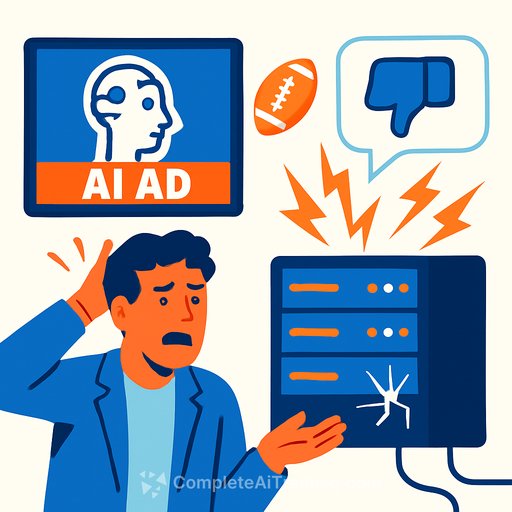
Super Bowl ad slots promise reach. This year, they also brought heat. Half of social chatter around AI-driven spots skewed negative, with many viewers saying "automation" dragged down production quality. Consumers judged harder than usual - and they noticed the seams.
What the data actually says
Roughly 23% of in-game ads featured AI (15 of 66). One brand took most of the air cover. Dunkin's "Good Will Dunkin" pulled 37% of AI-related mentions and 9% of engagement share, but the reaction called out a disjointed feel - AI-generated sitcom vibes smashed together with celebrity cameos.
For clarity: Meltwater defines "sentiment" as the tone of conversation by volume of mentions, and "engagement sentiment" as the tone of conversation by reactions to those mentions. Different lenses, different conclusions. Source-worthy if you report up the chain: Meltwater.
Winners by response, not just noise
AI.com - pitched as a future personal AI assistant - triggered immediate sign-ups for handles and even crashed its servers. By EDO's read, the spot generated 9.1x engagement versus the median Super Bowl LX ad. That edged out Universal's "Minions & Monsters" at 9.09x.
Other strong performers: Lay's, Netflix, Universal's "Disclosure Day," Cadillac, Budweiser, Invest America, and Wegovy. If you care about predictive lift, EDO remains a solid benchmark for post-game reads: EDO.
Why some AI ads missed
- The tech led, the story followed. Viewers smelled the gimmick fast.
- Production shortcuts were visible. Super Bowl audiences expect craft, not comps.
- Celeb integrations felt stapled on, not earned by the concept.
What to do differently next year
- Make the idea carry the load. If AI doesn't serve the concept, skip it. Novelty ages in hours.
- Set a "quality floor." Treat AI like any tool. If the output can't pass human-grade editing, reshoot or rewrite.
- Pre-game truth test. Run social listening sprints on variations. Watch for "cheap," "fake," and "cringe" signals before you commit.
- Measure both sentiment and behavior. Track tone (mentions and reactions) alongside site sign-ups, retargetable traffic, and branded search.
- Plan for surges. If your CTA drives account creation or waitlists, load-test your stack. Nothing kills heat like a dead link.
- Integrate talent with intent. Celebs need narrative utility, not just face time. If the story works without them, that's your answer.
- Disclose smartly. If you use synthetic elements, consider on-screen cues that fit the narrative. Transparency builds trust when the craft holds up.
Where budgets are flowing
Signals point to four themes audiences care about: AI consumer services, cryptocurrencies, sports wagering, and weight-loss medications. That's where curiosity and urgency live right now. If your category sits nearby, move fast - with strategy, not stunts.
The real takeaway for marketers
AI can spark interest, but it doesn't buy goodwill. High craft and a clean user path still win. If your big-moment media is locked, put extra cycles into story, polish, and post-click experience. That's where the ROI hides.
Want a tighter handle on AI for creative, media, and measurement? Explore our AI Certification for Marketing Specialists. If you're leading implementation across a unit, check the AI Learning Path for Business Unit Managers.
Looking at 2026
Consumer demand is forming around utility: save me time, make me money, help me feel better. If AI helps you deliver that, use it. If not, don't force it. The market - and the comments - will tell you fast.
Your membership also unlocks: