Supreme Court leaves AI authorship off the table: Human creators keep the keys to copyright
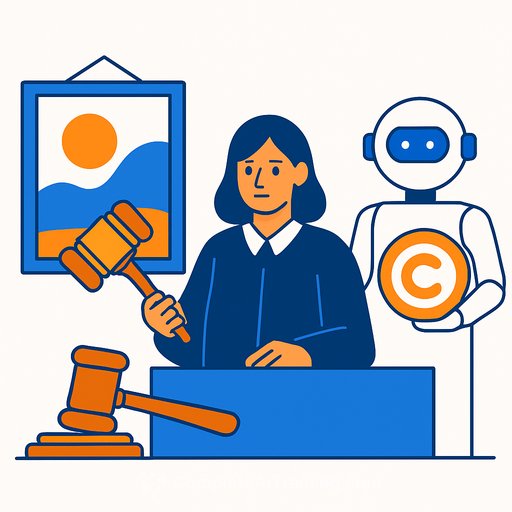
The Supreme Court declined to hear a challenge on whether AI-generated art can be copyrighted. That keeps the current rule intact: copyright belongs to humans, not machines.
The case was brought by Stephen Thaler, a Missouri computer scientist, after the U.S. Copyright Office refused registration for "A Recent Entrance to Paradise," a digital image he says was produced entirely by his AI system, DABUS-no human input.
The case, in brief
Thaler applied for copyright in 2018. The Copyright Office rejected the application in 2022, saying copyright requires a human author. A federal judge echoed that in 2023, calling human authorship a "bedrock requirement of copyright." The D.C. Circuit affirmed in 2025.
On Monday, the Supreme Court declined to review the case. Thaler's team argued the issue is urgent for creative industries using AI. The government had previously urged the Court not to take the case, noting that the Copyright Act's use of "author" refers to a human, even without an explicit definition.
This is the second time the Court has passed on Thaler's AI arguments. It earlier declined his bid to list an AI as an inventor on patent filings for a beverage holder and a light beacon-another loss grounded in human authorship rules.
What this means for creatives
- AI-only outputs can't be copyrighted by the AI or by you. If a system produces the final image independently, there's no copyright to claim.
- Using AI as a tool is different. If you add original, human expression-selection, arrangement, composition, and substantial edits-those human elements can qualify. Still, the Copyright Office has denied some AI-assisted applications, so your contribution must be clear and meaningful.
- If you commission or generate an AI-only piece, your rights will come from contracts and platform licenses, not copyright. Read the terms.
- Expect more scrutiny in registration: you may need to disclose AI involvement and limit claims to the human-authored parts.
How to keep your work protectable while using AI
- Start with a human concept: sketches, mood boards, reference studies, or story beats. Treat the model as a draft generator, not the final hand.
- Direct and refine: write detailed prompts, iterate intentionally, and document your decisions. Your judgment is part of the authorship.
- Do substantial, visible edits: paint-overs, masking, compositing, typography, re-lighting, recoloring, and structural changes. Aim for transformation, not touch-up.
- Keep layered source files and a process log. Show what you changed and why.
- Avoid publishing raw model outputs as-is. Finish them with your taste and technique.
- Register what's human-authored and disclose AI-generated elements per current guidance.
- For teams: assign a human author for each creative area (art direction, layout, copy) and track contributions.
Risks to plan around
- Training data and licensing: unknown datasets can create exposure. Favor tools and stock providers that offer clear rights and, ideally, indemnity.
- Client contracts: specify whether AI is used, who owns what, and what gets delivered (including layered files and process notes if needed).
- Jurisdiction differences: rules can vary outside the U.S. Align releases, marketing, and registrations with your target markets.
What to watch next
- Future cases will test how much human input is "enough" to qualify. Expect more line-drawing around prompts, curation, and edits.
- Agencies and courts may refine disclosure and registration rules for mixed human/AI works. Congress could step in if disputes pile up.
Bottom line: Treat AI like a brush, not the painter. Make clear, original choices. Leave a paper trail. Then claim the parts that are truly yours.
Helpful resources
Your membership also unlocks: