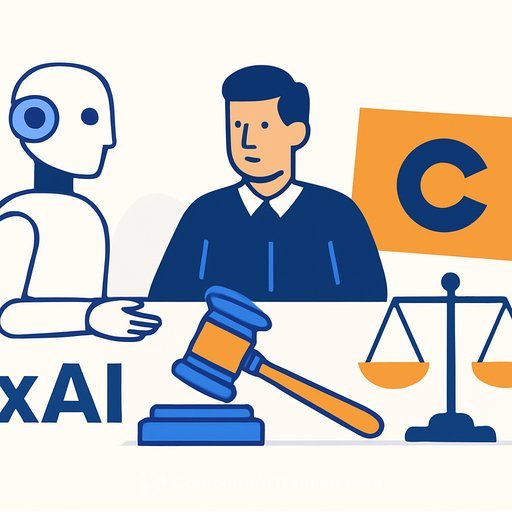
AI Must Serve Arbitration, Not Replace Judges, Supreme Court Justice Says
Justice Prashant Kumar Mishra of India's Supreme Court said arbitration's future depends on pairing human judgment with artificial intelligence, not choosing between them. He made the remarks Saturday at the 5th India Council for Arbitration conference on arbitration in the era of globalization.
The justice framed AI as a "useful servant but a dangerous master," endorsing its practical benefits while warning against unchecked adoption.
Where AI Helps Now
AI systems are already reducing arbitration delays and costs. Document review that took weeks now takes hours. Predictive analysis based on past awards helps parties assess exposure. Procedural automation cuts administrative overhead.
Online dispute resolution has emerged as a natural extension, offering flexibility and lower costs for cross-border cases. Courts have begun recognizing electronic arbitration agreements, signaling legal acceptance of digital processes.
The Risks Justice Mishra Flagged
Data privacy sits at the top of his concerns. Arbitration often involves sensitive commercial information. Weak safeguards could expose confidential details to breaches.
AI cannot replicate human reasoning on fairness and equity. Machines lack the ethical discretion that judges apply. The opacity of algorithmic decision-making-what experts call the "lack of explainability"-erodes trust in arbitral outcomes.
Unequal access to advanced tools creates another problem. Well-resourced parties gain advantages over opponents without the same technology. Cybersecurity vulnerabilities and deepfakes complicate evidence authentication in digital proceedings.
Justice Mishra recalled cases where AI-generated legal research produced fictitious case law. The error traced back to human oversight, not the technology itself. The lesson: vigilance matters more than rejection.
What Safeguards Look Like
Justice Mishra referenced NITI Aayog's guiding principles for responsible AI: transparency, accountability, and protection of human values. These principles could form a foundation for arbitration without compromising its integrity.
The judiciary plays a dual role. Courts must safeguard constitutional values and procedural fairness while encouraging innovation that increases access to justice. The balance is narrow.
Legitimacy in digital arbitration depends on maintaining human control over technological tools. Innovation should strengthen the system, not destabilize it. Trust, fairness, and transparency remain non-negotiable.
For legal professionals working in dispute resolution, understanding AI's capabilities and limits is now essential. AI for Legal professionals can help navigate these tools responsibly.
Your membership also unlocks: