The AI videos supercharging Russia-linked disinformation: a PR response playbook
A short campus reel from King's College London was clipped, re-voiced with an AI clone, and pushed across social feeds. The synthetic voice sounded like Professor Alan Read, but the script attacked Emmanuel Macron and Western leaders. He called it "utterly alien" to him. It's a clean example of how convincing and corrosive these videos have become.
This isn't random spam. Researchers and security analysts point to coordinated networks aligned with Kremlin interests seeding synthetic clips, laundering them through aged or hijacked accounts, and steering attention with bot amplification. The goal: bend conversations about the EU, Ukraine, and Western policy at the exact moments they matter.
The uncomfortable part for comms leaders: persuasion at scale is now cheap. Guardrails exist, but copycat apps undercut prices and offer loose policies, including weak watermarking and easier face/voice cloning. That puts public figures, brands, and institutions in the crosshairs.
Why the spike now
Newer text-to-video systems (for example, OpenAI's Sora2) have raised the realism bar. Meanwhile, second-tier tools make it easy to clone a face and voice, often with fewer checks. That means a convincing fake can be produced and distributed faster than most teams can verify and respond.
Platforms do remove coordinated influence operations, but speed kills. Clips can rack up hundreds of thousands of views in hours, then hop platforms. Even when content comes down, the narrative lingers.
Patterns PR teams should expect
- Targeting moments of leverage: elections, funding votes, policy debates.
- Focusing on credibility attacks: "EU is failing," "Kyiv is corrupt," "Western leaders are incompetent."
- Using attractive messengers: young creators, "experts," or trusted academics cloned with AI.
- Layered distribution (often called "Matryoshka" by researchers): false claims are wrapped in waves of reposts from old or compromised accounts to create artificial consensus.
- Reusable narratives: push a corruption claim today, see it dominate a slice of conversation next week, then repackage it with a new face.
One research team tied a network dubbed Storm-1516 to veterans of a past Kremlin troll operation. They found that each time the network pushed a "Zelensky is corrupt" frame, it captured a measurable share of conversation about the Ukrainian president on X in the following week. That is textbook agenda capture.
Your threat model (in plain English)
- Assets at risk: executive likenesses, brand channels, event footage, livestreams, prior interviews.
- Likely attacks: voice-cloned statements, face-swapped videos, edited reels that "prove" misconduct, fake endorsements.
- Objectives of the attacker: seed doubt fast, trigger media pickup, split audiences, waste your time.
Rapid response workflow (0-60 minutes)
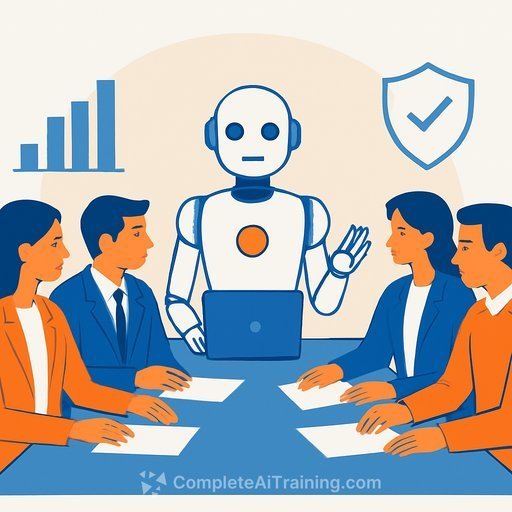
- Activate triage: one comms lead, one OSINT/analyst, one legal contact, one platform liaison. Keep decision rights tight.
- Verify fast: find the original source, compare frames, check upload metadata, and run a reverse video/image search.
- Document everything: URLs, timestamps, usernames, hashes, download the file. You will need this for takedowns and press.
- Classify risk: high (executive impersonation/safety), medium (brand misquote), low (low-reach spoof).
- Decide response in 15 minutes: ignore, quiet takedown, or public rebuttal. Speed beats perfection.
Detection cues your team can spot without a forensics lab
- Visual: mismatched lighting or shadows; jewelry, teeth, or irises that "crawl"; hair and edges that blur against backgrounds; lip-sync that lags on plosives.
- Audio: flat dynamics, missing room tone, breath sounds that don't match mouth movement, odd consonants, sudden EQ shifts.
- Context: new or recently renamed accounts, reused captions across multiple profiles, identical comments, sudden spikes from zero to viral.
Containment levers you should prep before you need them
- Takedown kits: prewritten notices for impersonation, copyright, likeness rights, and safety risks. Include evidence and hashes.
- Platform escalation: maintain updated contacts; tag trusted flaggers; cite relevant duties under the UK Online Safety framework when appropriate.
- Public rebuttal templates: 50-word post, a 200-word thread, and a subtitled 30-second video showing the original source and the fake side-by-side.
- Friction injections: pin a correction on your channels, reply once under high-reach posts with proof, then stop feeding the thread.
- Press note: concise, verifiable facts; link to evidence; name the fake; do not restate the false claim in headlines.
Pre-bunking: reduce the blast radius before the next fake hits
- Signature content: watermark official videos, use consistent lower-thirds, and publish a "How to verify our content" page.
- Voice and video policy: state that executives do not announce policy by AI video; list official channels and times.
- Executive prep: record clean baseline clips to compare against; media-train leaders to address deepfakes in two sentences.
- Stakeholder briefings: give partners and journalists a one-pager on how you will verify and respond.
- Tabletop drills: run a one-hour simulation each quarter with comms, security, legal, and IT.
Measurement that actually informs the next move
- Track share of voice for the false frame for 7-10 days; aim to bend the curve by day two.
- Map distribution nodes: first poster, top amplifiers, and crossover accounts to other platforms.
- Log time-to-detect, time-to-verify, time-to-action; cut each by 25% next quarter.
Useful training and references
To upskill your team on risks, workflows, and the tech behind these attacks, see Generative Video and Text-To-Speech.
For broader threat context and case studies on state-aligned information ops, Microsoft's threat intelligence blog is a good starting point: analysis and reporting.
Bottom line
AI-made influence is cheap, fast, and persuasive enough to cause real damage. Your defense is clarity, speed, and repetition. Build the kit now, run the drill, and keep receipts. The first hour decides the week.
Your membership also unlocks: