Tabnine launches Agentic Platform for enterprise dev teams
Tabnine has introduced the Tabnine Agentic Platform, bringing coding agents that complete entire workflows-not just code suggestions. The promise: ship faster while keeping control of code, context, and security.
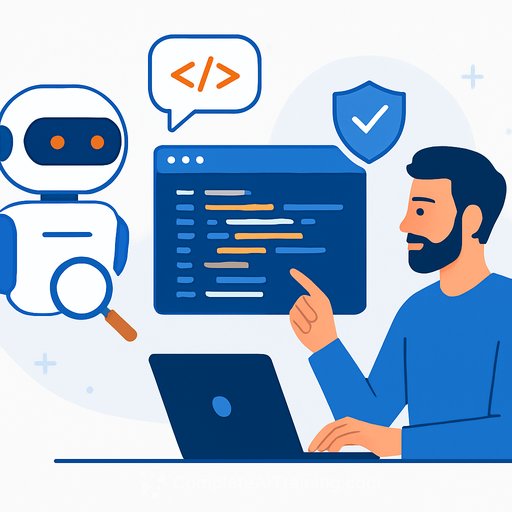
These "org-native" agents run on the Tabnine Enterprise Context Engine. They understand your repositories, tools, and policies, then plan, execute, and validate multi-step development tasks like refactoring, debugging, and documentation. The engine pulls in coding standards, source and log files, and ticketing data to stay aligned with how your team builds software.
How it works
Tabnine Agents can use external systems and tools to adapt to new codebases and policies without retraining or redeployment. Under the hood, the engine blends vector, graph, and agentic retrieval to interpret relationships across code, tickets, and tools-so agents can reason through multi-step workflows with context.
What these agents can do today
- Refactor codebases while following internal standards and policies.
- Debug across services using logs and source context.
- Generate or update documentation tied to real repositories and tickets.
- Execute end-to-end coding workflows with review loops and validations.
Why it matters for engineering leaders
You get throughput without sacrificing oversight. Centralized controls keep permissions, usage, and context in check, while the agents work autonomously inside your rules. It's a practical path to AI-assisted development that respects your stack and compliance needs.
Enterprise-grade benefits
- Agents automatically adapt to new codebases and policies-no retraining or redeployment needed.
- Agents act and iterate autonomously through coding workflows.
- Centralized control for permissions, usage, and context.
- Contextual intelligence across internal repos, ticketing systems, and coding guidelines.
- SaaS, private, VPC, on-premises, and air-gapped deployments that meet enterprise security standards.
Deployment options
Choose what fits your risk profile: SaaS for speed, private or VPC for tighter control, or on-prem/air-gapped for strict environments. The platform is built to meet enterprise security expectations across all models.
Practical next steps
- Connect core repos and ticketing systems; import coding standards and policies.
- Define permissions and guardrails for agent actions.
- Pick a pilot workflow (e.g., refactor a service, reduce a bug queue, or standardize docs).
- Review agent plans and outputs, then tighten policies and prompts based on results.
- Track cycle time, rework, and defect rates to quantify impact.
Learn more
Explore the platform details at Tabnine. If your team is leveling up on AI-assisted coding, you may also find this helpful: AI certification for coding.
Your membership also unlocks: