What IT Leaders Want for St. Nicholas Day: A Practical Wishlist for Ukrainian Tech
On the eve of St. Nicholas Day, we asked leaders across top IT companies what they'd wish for the industry. The answers were clear: win the war, protect our craft, and take the lead in AI delivery. Here's a focused wishlist - plus steps you can act on now.
The headline wish: victory and stability
First, victory. Without it, nothing compounds. Second, stable infrastructure and policy signals that let teams plan, invest, and scale. With that foundation, the rest becomes execution.
"So that AI development doesn't corrupt developers"
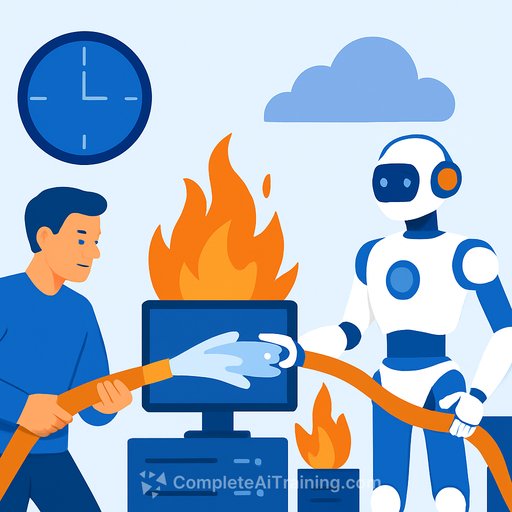
AI should make engineers sharper, not softer. The risk isn't the tools - it's slipping into thoughtless automation. Keep standards high, keep thinking first-class, and make AI serve engineering discipline, not replace it.
- Gate AI-generated code with the same reviews you expect from senior engineers. Require tests, threat models, and comments.
- Keep architecture docs and an RFC process alive. No silent scope creep via "quick AI fixes."
- Track provenance of generated code to avoid license, privacy, and security surprises.
- Run secure coding refreshers and red-team AI features for prompt-injection, data leakage, and abuse cases.
- Prioritize fundamentals: algorithms, debugging, profiling, system design. Pair AI assistance with TDD and performance budgets.
- Rotate engineers through low-level work (infra, performance, data pipelines) to avoid copy-paste complacency.
Adapt fast and own AI delivery end-to-end
The market will reward teams that can prototype, validate, and ship AI solutions with predictable cost and quality. That means strong product sense, clean data contracts, and MLOps discipline - not just cool demos.
- Pick 3-5 business problems where AI removes clear bottlenecks (support deflection, KYC checks, spend classification, QA triage).
- Invest in retrieval, evaluation, and guardrails before model tweaks. Good data beats model heroics.
- Stand up an eval harness with task-level KPIs, regression checks, and cost/latency tracking.
- Add observability for token spend, latency, success rate, fallback paths, and user feedback loops.
- Plan GPU/CPU mix and vendor optionality early. Keep a migration path ready.
A 90-day plan you can actually ship
- Run a skills audit and set learning tracks for engineers, data folks, and PMs. Consider focused curricula by role via Courses by Job or AI Courses by Leading Companies.
- Publish an AI development policy: data handling, model choice, eval standards, and secure deployment. As a reference point, see the NIST AI Risk Management Framework.
- Launch one export-ready pilot with clear ROI and a 12-week timeline. Define ICP, pricing, and a proof-to-contract path.
- Create a hiring pipeline for displaced engineers and returning specialists. Pair juniors with seniors in AI-assisted delivery pods.
- Set quarterly export targets, two priority markets, and localized compliance checklists.
Why this matters: exports and jobs
AI delivery done right can boost services exports and open thousands of high-skilled roles. From productized services to platform add-ons, there's room for Ukrainian teams to compete globally with speed and quality. The opportunity is real - if we execute with discipline.
A note from the field
Vitaliy Nuzhny, Regional Delivery Head at Ciklum, puts it simply: the first wish is victory. Right after that, Ukrainian IT must once again prove its ability to adapt and lead in the development and implementation of AI solutions - a path that can expand exports and create meaningful jobs for local specialists.
Useful resources
- NIST AI Risk Management Framework - practical guidance for managing AI risk across the lifecycle.
- Latest AI Courses - curated programs to upskill teams quickly.
Your membership also unlocks: