Taiwan’s Budget Boosts AI Development with Focused Government Projects
Taiwan’s upcoming central government budget will allocate significant funds to advance the country’s major artificial intelligence (AI) initiatives. Premier Cho Jung-tai announced that ministries will introduce multi-year plans in phases, with the initial year’s budget and project details unveiled alongside the budget release.
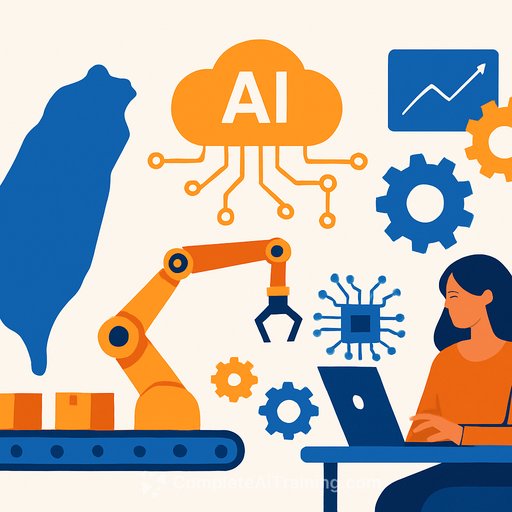
The government aims to position Taiwan’s smart manufacturing sector as a key driver for economic transformation, ensuring the country remains competitive globally. This effort integrates smart manufacturing, robotics, AI, and related industries into a supportive ecosystem for collaborative growth.
Three Pillars of Taiwan’s AI Strategy
The 10 flagship AI projects will concentrate on:
- Strategic Applications: Targeted AI solutions addressing industry needs.
- Foundational Infrastructure: Building the necessary hardware and software backbones.
- Key Technologies: Developing breakthroughs in quantum computing, robotics, and silicon photonics.
Premier Cho highlighted Taiwan’s commitment to developing sovereign AI capabilities, expanding computing power, nurturing AI talent, and making multi-billion-dollar investments to support these goals.
Smart Manufacturing and Industry Support
Taiwan’s smart manufacturing sector is expected to lead the next wave of technology innovation. Projects like the Shalun Smart Green Energy Science City in Tainan, an AI industrial park, exemplify the government's drive to contribute to global democratic supply chains.
To further support industry growth, an amendment proposing an additional NT$20 billion (approximately US$660 million) allocation for manufacturing was submitted. This funding aims to bolster innovation and competitiveness in the sector.
Intelligent Asia Exhibition Highlights AI and Robotics
The Intelligent Asia smart manufacturing exhibition in Taipei recently opened, featuring over 1,000 companies from 16 countries. The event includes 4,500 booths across eight specialized areas, such as automation, robotics, lasers, logistics, and 3D printing.
Key technologies on display include:
- Robotic arms and collaborative robots from industry leaders like Hiwin, Fanuc, and ABB.
- Embedded systems and edge computing solutions presented by Advantech, Nexcom, and Adlink.
- AI system integration powered by Siemens, Delta Electronics, and Syntec, focusing on data-driven automated decision-making.
- Energy management and storage systems from Shihlin Electric and TECO Electric & Machinery, supporting net zero manufacturing goals.
- Laser technologies including silicon photonics and precision processing solutions.
- Smart logistics and cold chain applications enabling efficient warehouse management and automated sorting.
The exhibition also hosts over 100 professional forums and seminars, providing IT professionals and developers with opportunities to explore practical AI applications and network with industry peers.
Industry Outlook
Szu Kou-i, president of the Taiwan Automation Intelligence and Robotics Association, emphasized the critical role of AI-driven robotics in upgrading manufacturing. He expressed optimism that Taiwan’s AI robot industry could soon exceed NT$1 trillion in production value.
For IT professionals seeking to deepen their AI knowledge, exploring specialized courses can provide valuable skills aligned with Taiwan’s evolving AI landscape. Resources like Complete AI Training offer a range of programs tailored to various AI disciplines.
Taiwan’s focused investment and strategic initiatives signal a clear path toward strengthening its AI capabilities and smart manufacturing leadership in the coming years.
Your membership also unlocks: