Taiwan's Artificial Intelligence Basic Act: Practical Takeaways for Legal Teams
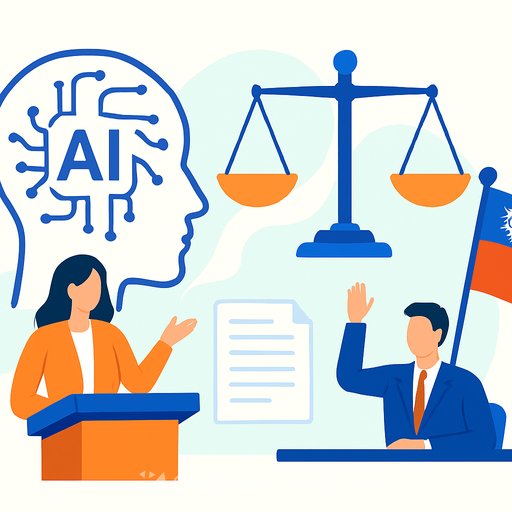
Taiwan has passed the Artificial Intelligence Basic Act at its third reading, creating the country's first legal guardrails for AI. The law was approved without textual changes and is now in force.
The National Science and Technology Council (NSTC) is named the central competent authority. County and city governments will handle local implementation, giving the framework both national coordination and on-the-ground oversight.
Governance Structure You'll Work With
The Cabinet will set up a national AI development committee chaired by the premier. Expect participation from experts, industry, central and local officials, and agency heads to maintain a unified strategy.
For regulatory affairs teams, NSTC will be the primary touchpoint on policy, guidance, and future rulemaking. Local governments will be relevant for audits, complaints, and day-to-day compliance issues tied to deployment.
Core Principles That Inform Compliance
- Sustainability and well-being
- Human autonomy
- Privacy protection and data governance
- Cybersecurity and safety
- Transparency and explainability
- Fairness and non-discrimination
- Accountability
These principles will likely anchor future standards, procurement terms, and enforcement priorities. Use them as the baseline for policy design and risk reviews.
Prohibited Uses and Risk Controls
The act bans AI applications that threaten personal safety, freedom, property rights, or privacy. It also prohibits systems that put social order, national security, or environmental sustainability at risk.
Biased or discriminatory outcomes are targeted, as are false advertising, misinformation, and fabricated content. Developers of high-risk systems must provide clear notices or warnings to users.
High-Risk Systems: Immediate Legal Implications
If your product or client work touches high-risk use cases, treat user notification as a non-negotiable. Build standard, plain-language notices into onboarding, UIs, and contracts.
- Document the purpose, limitations, and known risk factors of the system.
- Review data sources and training sets for privacy and bias issues.
- Stand up incident reporting and user complaint channels tied to AI behavior.
- Prepare audit-ready records of testing, monitoring, and versioning.
Enforcement and What Comes Next
Lawmakers signaled that the next phase will focus on enforcement mechanics, cross-ministerial coordination, and sustained input from industry and civil society. Watch for secondary regulations and guidance to clarify scope, thresholds for high-risk classification, notice format, and penalties.
- Expect more detail on supervisory powers between NSTC and local governments.
- Plan for rules on security controls, explainability standards, and anti-bias testing.
- Anticipate requirements for labeling or warnings where AI content may be mistaken for human-generated material.
Practical Checklist for Counsel
- Inventory AI systems, use cases, and data flows; flag potential high-risk deployments.
- Draft user notices/warnings and integrate them into product UX and terms of service.
- Update privacy policies, data governance, and retention schedules to meet the act's principles.
- Establish bias testing, human oversight, and corrective-action procedures.
- Tighten vendor and model-provider contracts: warranties, audit rights, security, and IP/content integrity clauses.
- Train product, engineering, and support teams on prohibited uses and escalation paths.
- Set up a cross-functional AI review board for approvals, monitoring, and post-deployment audits.
Regional Context
With this act, Taiwan joins other Asian economies formalizing AI governance across telecom, manufacturing, and digital services. For benchmarking, compare principles-based duties here with risk-tiered obligations emerging elsewhere.
Useful references include the NSTC for policy updates and the EU's AI Act for a mature risk framework.
Upskilling for Legal Teams
If your team is building capability in AI governance, policy, and product counseling, curated learning paths can help standardize practice across the org.
Bottom line: the Artificial Intelligence Basic Act sets clear direction-promote innovation, protect people, and keep systems accountable. Getting your governance, documentation, and vendor posture in place now will save time when enforcement guidance lands.
Your membership also unlocks: