Take Solutions adopts Anthropic's Claude to boost AI in preventive healthcare
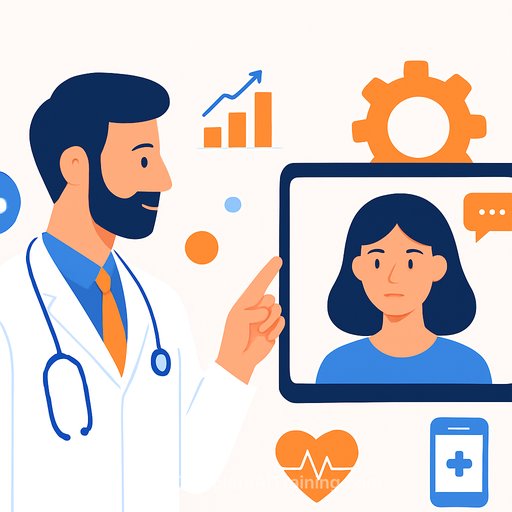
Take Solutions has integrated Anthropic's Claude into its upcoming platforms to move care from reactive treatment to proactive prevention. The rollout spans its AI-driven Preventive Healthcare Platform, the One Minute Clinic, and a Unified AI Marketplace.
"Artificial intelligence is becoming the foundation of next-generation healthcare. The integration of advanced Claude AI capabilities significantly enhances our technology stack," said Take Solutions Chairman Parmeshvar Dhangare.
For healthcare organizations, this points to a practical shift: more precise triage at the front door, earlier risk detection across panels, and less time lost to documentation. If executed well, these gains translate to better patient outcomes and measurable operational efficiency.
What this could mean on the ground
- Point-of-care support in kiosks and clinics: quick symptom intake, triage suggestions, and routing to the right level of care.
- Risk prediction and preventive outreach: flag rising-risk patients, schedule screenings, and close care gaps before they escalate.
- Clinical documentation and coding assistance: summarize encounters, draft notes, and map terms to standard codes with clinician oversight.
- Patient communication at scale: multilingual education, reminders, and follow-ups that adapt to literacy and context.
- Unified AI Marketplace: a vetted catalog of tools with centralized procurement, security reviews, and usage monitoring.
Data, safety, and governance to line up early
- Privacy and security: protect PHI with role-based access, encryption, and clear retention policies; maintain consent logs.
- Clinical safety: human-in-the-loop review for high-stakes use, version control, and rollback plans.
- Accountability: audit trails for prompts, outputs, and edits; clear ownership for outcomes and incident response.
- Fairness: test for performance differences across demographics and care settings; remediate with documented controls.
- Validation and monitoring: pre-deployment testing against gold standards, then continuous drift checks and post-market surveillance.
- Interoperability: FHIR-based integration with EHRs and care-management tools to keep workflows intact.
- Regulatory alignment: map use cases to local health-data laws and medical-device guidance where applicable.
Practical next steps for providers and payers
- Pick 1-2 narrow, high-impact use cases (e.g., intake triage, note drafting). Define clinical and operational KPIs upfront.
- Stand up a cross-functional team: clinical leaders, data science, IT, compliance, security, and patient experience.
- Create a risk register and red-teaming plan for prompt misuse, hallucinations, and edge cases; set escalation paths.
- Pilot in a controlled setting, compare against baseline, and document learnings before wider rollout.
- Train staff, write clear patient-facing disclosures, and establish feedback loops to improve accuracy and trust.
For background on Claude and how it's applied in clinical workflows, see Anthropic's Claude. Teams evaluating skills development can explore resources on Claude and sector-specific material on AI for Healthcare.
Your membership also unlocks: