Anthropology + AI: A Practical Playbook for Building a Stone Age Research Game
Scientists from the University of Copenhagen and the University of Bergen are blending anthropology with AI to build an educational video game about life in Stone Age Europe. The project shows how research teams can ship immersive, research-based experiences with free tools-without big budgets or full-time dev teams.
See Research resources on tools and methods for academic projects.
For years, interactive history projects were costly and often prioritized spectacle over accuracy. This work flips the script by putting peer-reviewed research at the center and using accessible tech to deliver it.
What they built
The game focuses on the Deep Histories of Migration project and the Neolithic period in Northern Europe. It's anchored in detailed video recordings of two long dolmens at Lindeskov Hestehave on the island of Funen, Denmark.
Players move through a dynamic 3D site, learn as they explore, and engage with content rather than watching passively. The team combined Unreal Engine, free AI platforms, and online tutorials to build it quickly and at low cost.
AI characters that talk-and stay accurate
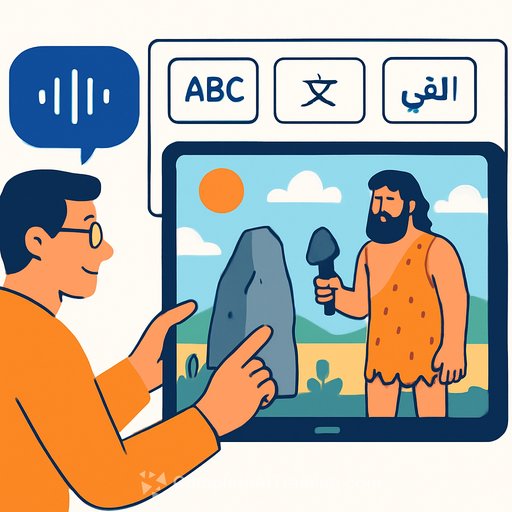
The experience features two conversational characters: a modern archaeologist and a Stone Age woman known as "Dolmen Debbie." Unlike static, prewritten dialogue trees, these characters respond more naturally to player questions.
The responses draw on curated background narratives and archaeological knowledge supplied by the researchers. The system supports English and multiple other languages, and the knowledge base can be updated as new findings emerge, keeping the experience aligned with current scholarship.
Why this matters for research teams
According to archaeologist Mikkel Nørtoft, accessible tools are changing how the past is communicated. "We believe these free tools, now available to everyone, can transform how the past is communicated," he says, noting that their paper provides a practical starting point for others.
He adds: "Our game shows what is technically possible with limited experience. With a little help, most people can learn to build a simple scenario with characters in just a few days."
How to replicate the approach
- Start with a well-scoped site or artifact set and a clear audience outcome (e.g., inquiry-based learning for museum visitors).
- Document the site with high-quality video or photogrammetry, and organize references, notes, and citations into a structured knowledge base.
- Assemble a walkable scene in a real-time engine (e.g., Unreal Engine) and prototype interactions with tutorials.
- Create AI characters with concise roles, tone, and behavioral constraints. Point them to your vetted sources; require citations in responses where appropriate.
- Enable multilingual output and add content guardrails to prevent speculation beyond the sources.
- Build an update loop: version your knowledge base, log player questions, and patch content as new research is published.
Quality and governance
Keep every in-game claim linked to a source that someone on your team has checked. Make it obvious to players what is evidence-based, what is interpretation, and where uncertainties remain.
Add a simple changelog inside the experience. Treat it like a living exhibit that improves as the literature grows.
Access and impact
Lower costs and fewer technical barriers mean museums, labs, and classrooms can build accurate, engaging experiences faster. This isn't about replacing exhibitions-it's about giving visitors a way to ask better questions and get credible answers.
The research paper describing the project was published by Cambridge University Press.
Next steps for your team
- Pilot a single site or artifact. Ship a small, testable build in weeks-not months.
- Instrument feedback: track common questions, confusion points, and languages used.
- Publish your methodology alongside the experience so others can repeat or extend it.
If your team wants structured upskilling on AI tools for research and education projects, explore curated options by role at Complete AI Training.
Your membership also unlocks: