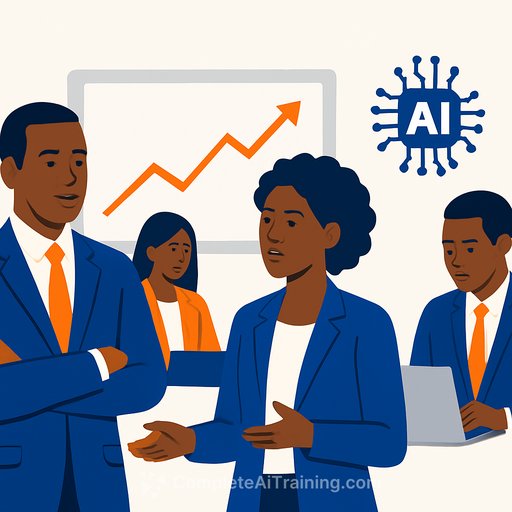
Tanzania's CEOs See Growth Ahead but Struggle With AI Strategy
Tanzania's business leaders expect strong revenue growth over the next three years, yet most admit they lack the digital capabilities to compete globally. A PwC survey reveals this contradiction: 65 percent of CEOs project revenue growth, but only 36 percent have defined artificial intelligence strategies.
The confidence gap widens when it comes to execution. While 82 percent of CEOs remain optimistic about local market expansion-well above global averages-more than half say they are not moving fast enough on digital innovation. Just 19 percent believe their AI investments are sufficient.
Skills Shortages Top the Risk List
Tanzania's youthful population should be an advantage, but companies cannot find job-ready talent. Skills shortages rank as the top concern for 27 percent of CEOs surveyed. Graduates often lack the specialised expertise needed in AI, data analytics, and advanced technologies.
This gap persists despite efforts like the Samia Scholarship programme, which targets training in data science and artificial intelligence. Business leaders say more investment in science, engineering, and international exposure remains essential.
AI Adoption Lags Behind Stated Readiness
Around 70 percent of CEOs claim they are prepared for AI integration. The reality differs sharply. Only 12 percent currently use AI in strategic decision-making, and more than half report that AI has not yet delivered significant impact.
Tanzania completed its AI Readiness Assessment with UNESCO in 2025, establishing ethical frameworks and laying groundwork for future adoption. Whether companies act on this foundation remains uncertain.
Economic Fundamentals Support Optimism
Tanzania's GDP is projected to grow between 6.1 and 6.2 percent in 2026. Stable macroeconomic conditions and steady inflation support business confidence. Nearly half of CEOs are exploring cross-border opportunities with Kenya, Uganda, and other East African partners.
Geopolitical tensions complicate this picture. About 22 percent of CEOs cite global conflicts as a key risk, while 25 percent report delays in major investments due to international instability.
Partnerships Emerge as a Shortcut
Rather than building capabilities internally, 25 percent of CEOs now prioritise collaborations with technology firms to accelerate transformation. External partnerships offer a faster path to competitive advantage than in-house development.
Success depends on execution, not optimism alone. CEOs must invest in skills, adopt new technologies, and adapt quickly to global shifts. The next decade will determine whether Tanzania's growth story continues or stalls.
For executives facing similar challenges, understanding how to build AI strategy and bridge skills gaps is critical. AI for Executives & Strategy resources can help leaders move from planning to action. Those looking for structured guidance should consider the AI Learning Path for CEOs.
Your membership also unlocks: