AI Education for America's Youth: Build Critical Thinkers, Not Passive Users
Generative AI hit classrooms before most schools had a plan. That's fine. Education has a plan: teach literacy, judgment and the discipline to question. Tools change fast. Critical thinking holds.
National momentum-and what it means for your district
In April 2025, President Donald Trump signed an executive order to advance AI education for American youth. By September 8, 2025, 141 companies had pledged resources for schools-funding, curricula, teacher training, workforce materials, and technical mentorship over four years.
The administration also stood up the White House Task Force on AI Education, with an emphasis on trustworthy, secure models. Industry leaders have been clear: integrity, ethics, and protection from malware and data poisoning aren't "nice to have." They're table stakes for anything entering schools.
The real risk: AI as the new "arbiter of information"
AI now mediates what students see, believe and repeat. Adults have baseline knowledge to filter claims. Kids often don't. They need explicit instruction to spot false signals, challenge bias and verify sources.
That gap is why misinformation and disinformation target youth. If we don't teach source-checking and judgment early, we leave students exposed.
Building an AI literacy ecosystem (beyond tools)
Nonprofits and industry are filling in. aiEDU, founded in 2019, offers free, ready-to-use curricula so schools can start without buying tech. The ChatGPT moment forced every classroom to engage with AI, and aiEDU met that moment with practical lessons, not hype.
Booz Allen Hamilton has supported aiEDU since the start and frames AI as a horizontal skill-less a "CS topic," more a life skill that cuts across subjects and careers.
Teach analysis, not dependency
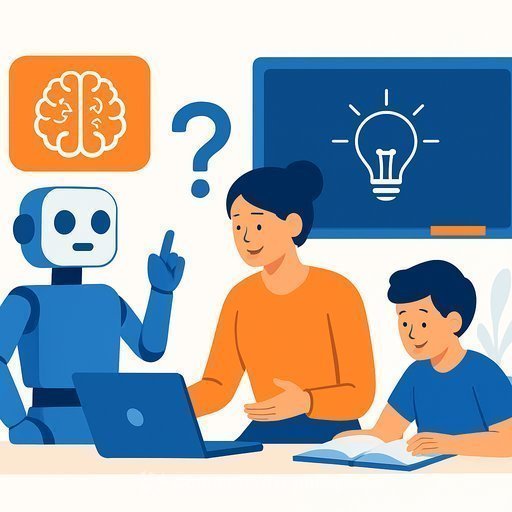
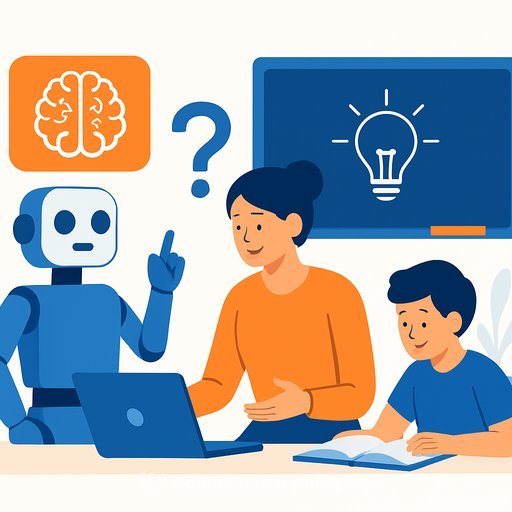
Students are using AI, often passively. That's the problem. We need them to ask precise questions, challenge outputs, protect data and recognize manipulative patterns. AI should reinforce human judgment and relationships, not replace them.
Think like an analyst: simple methods students can use
Intelligence work isn't mysterious. It's disciplined curiosity. The core moves translate well to K-12:
- Question the claim: What is being asserted? What's missing?
- Triangulate: Verify with at least two independent sources.
- Source hygiene: Who wrote it, who benefits, and who reviewed it?
- Operational testing: Try to falsify it. Does the claim hold up under a quick experiment or counterexample?
- Bias checks: What assumptions am I bringing to this? What is the model likely biased by?
Practical steps you can implement this term
- Adopt an AI use policy for staff and students: permitted tools, privacy rules, model versioning, citation expectations.
- Run daily "credibility warm-ups": one screenshot, three questions, two corroborating sources.
- Introduce a standing triangulation drill: students must submit two independent confirmations for any AI-assisted fact.
- Bias labs: have students compare different model outputs, identify patterns, and document inconsistencies.
- Data privacy 101: red-team prompts that try to extract personal info; practice refusal and redaction.
- Deepfake drills: analyze video/audio artifacts, and practice verification workflows.
- AI-in-the-loop projects: students use AI for brainstorming or outlining, then justify what they kept, changed or discarded.
- Academic integrity protocol: require process artifacts (prompt history, drafts, change logs) for major work.
- Teacher PD cadence: short weekly clinics on prompts, evaluation, and classroom management with AI.
- Cross-curricular tie-ins: civics (media literacy), ELA (argument quality), science (testable claims), CS (model limits).
- Parent briefings: show how AI is used, what's off-limits, and how families can support source-checking at home.
- Metrics: track incidents, student confidence in verification, and assignment quality before/after AI protocols.
Military-connected students need extra protection
These learners face higher rates of targeted phishing and influence attempts. Prioritize digital hygiene: credential security, device checks, reporting channels and how to spot spearphishing, deepfakes and geo-targeted scams. Pair tech skill-building with ethics and security from day one.
Avoid the extremes
AI-only tutoring models are tempting, but there are concerns about metacognitive development when struggle is removed. On the other end, banning tools pushes AI use into the shadows and widens gaps.
The path forward is human-centered instruction with AI as a support. Keep teachers at the core. Use models for draft thinking, practice, personalization and feedback-then require human reasoning on top.
Equity isn't optional
There's a real risk that under-resourced students get "all the AI and widgets," while affluent students get small classes and rich, teacher-led learning. Don't let that happen. Every student deserves strong human teaching plus safe, effective AI support.
What to do next
- Run a 90-day pilot: pick two grades, two subjects, clear outcomes and a simple evaluation plan.
- Adopt a starter AI literacy unit (e.g., from aiEDU) and embed it across subjects; see the AI Learning Path for Primary School Teachers for concrete lesson sequences.
- Stand up an AI advisory group: teachers, students, parents, IT, legal, and community partners.
- Set procurement guardrails: data privacy, model transparency, and opt-out paths for families.
- Publish your AI classroom norms and model prompts so students learn good habits by example.
If you want a quick way to explore training options by role and skill, this curated index can help: AI courses by job.
The goal isn't to make every student a machine learning engineer. It's to make every student a skeptical, informed thinker who can use AI without being used by it. Start small. Make it real. Iterate fast.
Your membership also unlocks: