Tempus AI's Cardiology Trial Points to Real Clinical Impact-and Revenue Questions
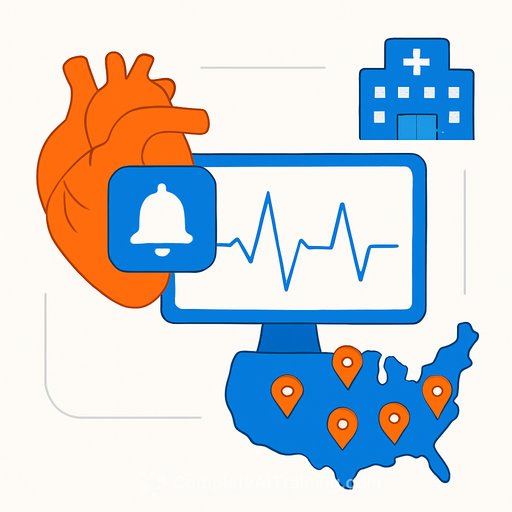
Tempus AI released results from its ALERT trial showing that AI-driven alerts in electronic health records improved how quickly patients with serious valve disease received specialist evaluation and treatment across five U.S. health systems. The system uses natural language processing to scan echocardiogram reports and automatically notify clinicians when it detects significant aortic stenosis or mitral regurgitation.
The trial demonstrates that AI for Healthcare can change real-world clinical workflows. But for investors and healthcare leaders evaluating Tempus, the results raise a harder question: can the company turn clinical wins into sustainable revenue?
The Clinical Case Is Clearer Than the Business Case
ALERT reduced treatment gaps across demographic groups and care settings. Patients who might otherwise have waited months for specialist evaluation got flagged faster. Procedure rates increased. This is measurable clinical value, not theoretical.
The business challenge remains unresolved. Tempus's investment narrative projects $2.3 billion in revenue and $358.5 million in earnings by 2029-requiring 22% annual revenue growth and a $603.5 million earnings improvement from its current -$245 million position. Those numbers depend on healthcare systems and payors actually reimbursing AI decision support at scale.
Today, reimbursement for AI alerts remains uncertain. Hospitals may adopt tools that improve care, but they don't always get paid differently for using them.
Pharma Partnerships May Matter More Than You'd Expect
Tempus recently announced a collaboration with Daiichi Sankyo, a pharmaceutical company. This partnership signals a shift in how Tempus plans to make money. Rather than relying solely on healthcare systems to pay for diagnostic and decision-support tools, the company is monetizing its foundation models and real-world data through pharma relationships.
If ALERT-type results validate the clinical value of Tempus's Generative AI and LLM algorithms, deals like the Daiichi Sankyo agreement could become a counterweight to reimbursement pressure in the core testing business. Pharma companies pay for data and insights that help them develop and market drugs more effectively.
What Analysts Already Expected
The most optimistic analysts were already assuming 31.7% annual revenue growth and $139.2 million in earnings by 2029 before the ALERT results. The trial could support those projections-or prompt some analysts to recalibrate their assumptions about whether payors will actually fund AI-based decision support.
The ALERT data doesn't resolve that uncertainty. It proves clinical utility. It doesn't prove reimbursement will follow.
What Healthcare Leaders Should Watch
For hospital systems considering Tempus tools, the ALERT trial provides evidence that the technology works. Implementation decisions should focus on whether your organization can absorb the cost without immediate reimbursement, or whether your payers have committed to covering AI decision support.
For professionals evaluating Tempus as a business, the question is narrower: does clinical validation eventually lead to payment models that support the company's growth targets? The ALERT trial moves the needle on clinical proof. It doesn't answer the reimbursement question.
Your membership also unlocks: