AI cuts the learning curve for advertising campaigns
Advertising campaigns typically start in the dark. An advertiser launches with a clear goal and solid creative, but early performance is uneven. Manual adjustments follow. The system learns slowly. Resources get spent correcting course instead of improving strategy.
AI is shortening this cold-start phase. By using large language models with embedded knowledge, advertising systems now infer user intent faster, test delivery strategies more efficiently, and reach stable performance earlier than traditional approaches.
For businesses, that means momentum builds sooner and fewer resources go to damage control.
The friction that makes advertising hard to scale
Campaign setup is manual and time-consuming. Creative testing is slow and expensive. Performance varies widely across audiences, contexts, and placements, making outcomes difficult to predict.
As campaigns grow, teams spend more time adjusting settings and less time improving strategy. These problems compound at scale and disadvantage smaller teams without the staff to manage the work.
Automation reduces manual work by 80 percent
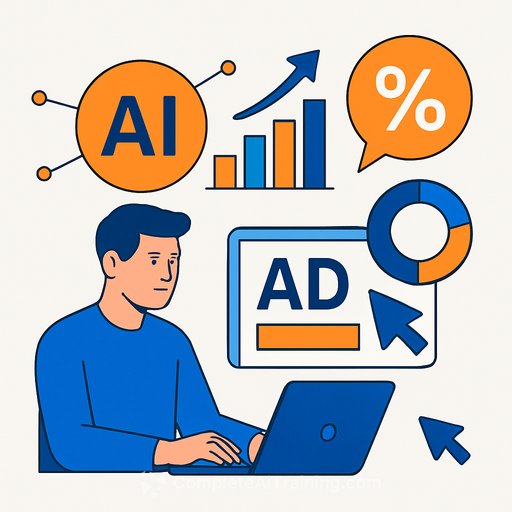
Intelligent delivery systems now automate targeting, bidding, placements, and creative optimization. Advertisers define objectives and preferences. The system coordinates delivery and optimization across the campaign lifecycle, cutting repetitive work.
The performance gains are measurable. Advertising inventory using AI across recommendation, delivery, and creative optimization has seen click-through rates rise to around three percent, compared to historic rates of one percent.
Operational efficiency improves as well. Data shows that for every $1,400 spent, required platform operations fell by around 80 percent.
AI-generated creative cuts production costs in half
Creative production has traditionally favored businesses with large teams and budgets. Testing ideas requires time and capacity that smaller teams lack.
AI design tools now analyze high-performing ads and generate refreshed variations automatically. Teams can test more ideas without expanding headcount or production costs.
One advertiser ran a campaign using only AI-generated materials and no dedicated creative team. The business cut creative costs by nearly half and significantly improved return on investment.
For many small and medium-sized businesses, this lowers the barrier to experimentation. The advantage shifts from scale to clarity.
Data and delivery are becoming more automated
Data is evolving from structured inputs into multimodal signals that combine text, images, and video. Delivery processes are becoming more automated across planning, optimization, and execution.
Creative is becoming more flexible too. As AI costs fall, ads can adjust automatically to different people and contexts, expanding relevance without increasing production effort.
As execution and optimization become automated, human judgment and original thinking become the differentiators. The value of creativity increases, not decreases.
Clarity matters more than novelty
Faster learning, fewer manual steps, and lower creative barriers help businesses operate with confidence. Teams spend less time correcting and more time shaping outcomes.
The most meaningful impact of AI for marketing is not novelty. It is clarity. As advertising systems evolve, the advantage will belong to businesses that learn faster, not just those that spend more.
Your membership also unlocks: