Tennessee Tech Professors Put AI Writing Tools Under Student Scrutiny
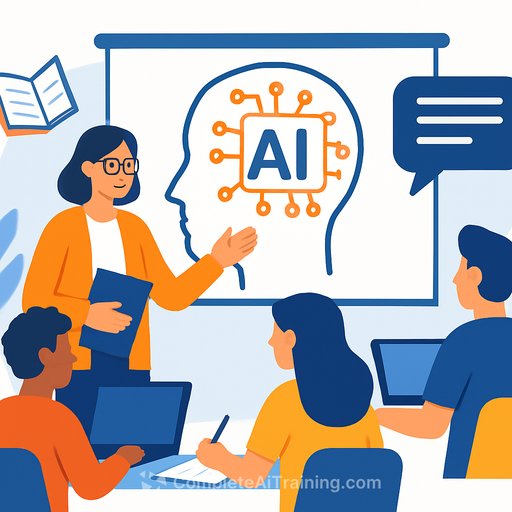
English faculty at Tennessee Tech University are bringing AI into composition and literature classes, asking students to test the technology's capabilities while examining its flaws. The department is not banning the tools. Instead, professors are having students experience how AI performs, analyze what it produces, and think through the implications for authorship and human voice.
Paulina Bounds, a professor of linguistics, has students explore both what AI writing tools can do and where they fail-including their tendency to generate inaccurate or biased information. Mari Ramler, an associate professor, incorporates AI experiments into professional and technical communication courses, asking students to compare strengths and weaknesses of machine-generated content against their own work.
The goal is straightforward. "I think it is important that we have serious discussions about it," Bounds said. "We don't want to look at it blindly as just something cool you can use; we want students to explore what is really behind it."
What the Research Shows
Graduate student Whitney Stevens created an AI writer named "Sinclair" to study differences between human and machine-authored creative writing. Her research tested reader preferences across genres without revealing which stories came from AI.
Readers often preferred the AI-generated stories-but only in certain contexts. "Those stories were typically in genres like sci-fi, fantasy and romance," Stevens said. "Readers made a clear distinction between what entertained them and what moved them. AI writing was more entertaining, but it didn't linger like writing from human authors."
The distinction matters. AI can produce engaging prose that holds attention in the moment. It doesn't produce work that stays with readers afterward.
Critical Questions Over Surface Judgments
Erin Hoover, an associate professor who teaches literature, moves beyond simple approval or rejection. Her courses ask students to examine philosophical questions around AI-generated or collaborative work, pushing them past surface-level opinions.
"We're not saying AI is good, and we're not saying it's bad," Hoover said. "We're asking, 'How are authors using it?' and 'Where are we at this point in time?' More often than not, we return to the importance of human intention."
Ramler sees a pattern across her courses. "By the end of the semester, I consistently see students reach a point where they say, 'Okay, now I understand how to use AI effectively, but I also understand the boundaries I'm comfortable with.' They also think more deeply about their voice and individuality in their writing."
New Course This Fall
Tennessee Tech's English department will offer several sections of a new digital literacy course this fall that fulfills a general education requirement. All freshmen will gain foundational knowledge about how AI works and its role in writing and communication.
For writers navigating these tools, the Tennessee Tech approach offers a practical model: test the technology, analyze its output, and establish your own standards for when and how to use it. Understanding both what AI can do and what it cannot is becoming basic professional literacy.
Learn more about AI for Writers and how Generative AI and LLM technology works.
Your membership also unlocks: