
AI news ·
Tesla plans $25 billion investment in AI, robotics and energy
Tesla is investing $25 billion to shift its core focus from cars to AI, robotics, and energy systems. The plan covers Optimus robot production, AI infrastructure, and chip development, though near-term margins will take a hit.
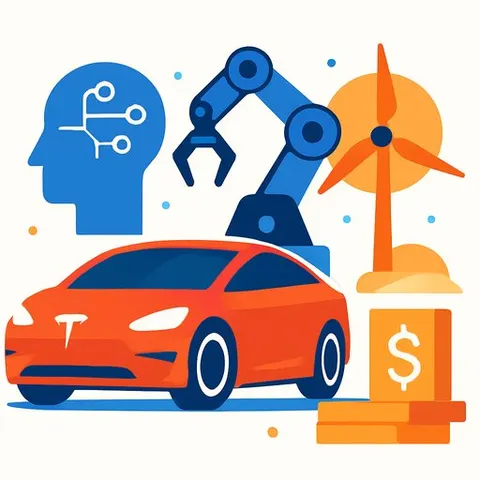
Tesla's $25 billion investment signals major shift toward AI and robotics
Tesla reported steady first-quarter results while outlining aggressive expansion into artificial intelligence, robotics, and energy systems. Executives say this strategy will define the company's next phase, even as it pressures near-term financial performance.
The $25 billion investment push reflects a fundamental strategic pivot. Rather than focusing primarily on vehicle production, Tesla is betting that AI and automation will become the primary drivers of shareholder value.
What the investment covers
The capital allocation targets three areas: AI infrastructure and software development, robotics manufacturing (including the Optimus humanoid robot program), and energy storage and solar solutions.
Tesla's Optimus robot has become central to this strategy. The company has outlined a three-phase production blueprint, with plans tied to China's robotics supply chain for component sourcing and manufacturing scale.
Strategic implications for executives
This shift requires executives and strategists to rethink Tesla's competitive positioning. The company is no longer primarily a vehicle manufacturer - it's positioning itself as a robotics and AI platform company that happens to make cars.
The near-term financial trade-off is real. Heavy investment in new capabilities typically depresses margins and returns on capital in the short term. Investors and board members will need to assess whether the long-term opportunity justifies the immediate cost.
Semiconductor development is another critical piece. Tesla has mapped out its own chip roadmap and is exploring potential alliances with Intel, signaling intent to control more of its supply chain for AI-driven systems.
Execution risks
Tesla has previously halted Optimus production plans due to hardware challenges. Scaling from prototype to mass production involves different engineering and manufacturing disciplines than vehicle assembly.
The robotics market remains unproven at scale. Success depends on solving technical problems that competitors are also tackling, with no guarantee that Tesla's approach will dominate.