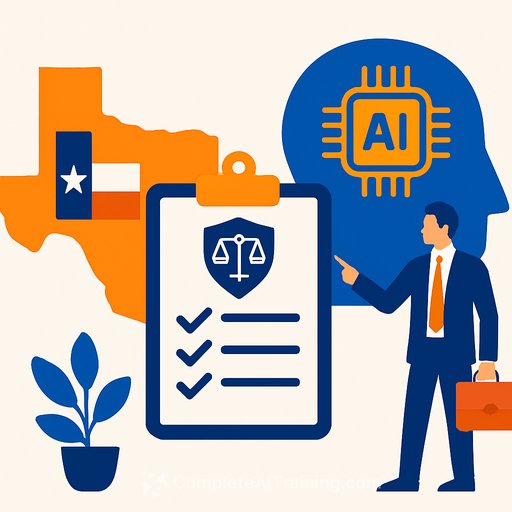
Countdown to 2026: What the Texas AI Law Means for Businesses
Texas is introducing new regulations on artificial intelligence with the Texas Responsible Artificial Intelligence Governance Act, set to take effect January 1, 2026. This law places restrictions on AI use by government agencies and extends to businesses operating in the state, offering products or services used in Texas, or developing or deploying AI systems there.
Key Compliance Areas for Businesses
- Appropriate Uses: Companies must ensure AI systems are not used to intentionally incite criminal activities, self-harm, or harm to others. AI applications must comply with state and federal discrimination laws and cannot infringe on constitutional rights. Additionally, the law prohibits AI-generated content that simulates child pornography or explicit deepfake imagery.
- Biometric Data: The law expands Texas’s biometric data regulations by requiring companies to obtain consent before using biometric identifiers—such as fingerprints, retina scans, or facial geometry—in AI systems for commercial purposes, including training AI. Biometric data must be destroyed within one year after its intended use expires.
- Healthcare Providers: Providers using AI tools in treatment must inform patients before treatment begins or as soon as possible in emergencies. This disclosure is similar to existing requirements in other states and ensures transparency in AI-assisted healthcare.
- Regulatory Sandbox Program: The law establishes a 36-month “regulatory sandbox” allowing approved businesses to test innovative AI systems in Texas. During this testing period, the Texas Attorney General cannot pursue charges for violations of the AI law. The law also offers safe-harbor provisions if companies promptly fix violations and provides a rebuttable presumption of care if industry standards like the NIST AI Risk Management Framework are followed.
Enforcement and Governance
The Texas Attorney General will enforce the law. Notably, there is no private right of action, meaning individuals cannot sue businesses directly under this statute. The law also creates an AI council tasked with guiding AI development and use within the state.
Preparing for the Law
Businesses affected by the law should review their AI practices ahead of the January 2026 deadline. This review should cover the use of biometric data in AI systems and, for healthcare providers, the integration of AI in patient care. Taking proactive steps can help ensure compliance and reduce legal risks.
For legal professionals and businesses looking to deepen their understanding of AI and its regulations, exploring specialized AI courses can be beneficial. Resources like Complete AI Training offer relevant courses to stay informed on AI developments and compliance needs.
Your membership also unlocks: