New Federal Law Targets Non-Consensual AI-Generated Nude Images
In response to a disturbing case involving a Texas high school girl, the U.S. has enacted a new federal law demanding swift removal of AI-generated fake nude images shared without consent. The law, known as the Take It Down Act, was signed by President Donald Trump and addresses a critical gap in existing revenge pornography statutes by covering AI-altered images.
The Catalyst: A Texas Teen’s Ordeal
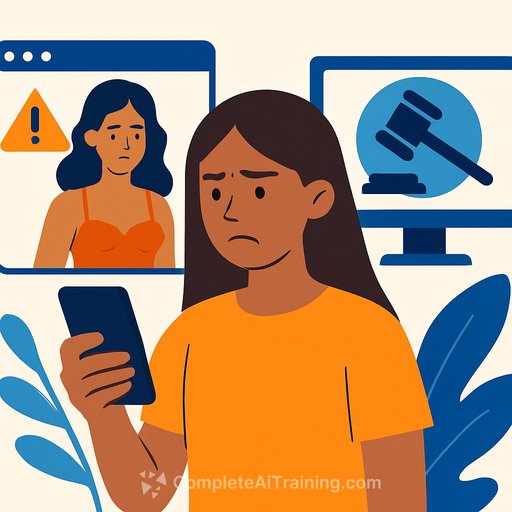
Elliston Berry, a 14-year-old from Aledo, Texas, discovered that innocent social media photos of her and her friends had been manipulated using artificial intelligence to create fake nude images. These images were then distributed among students at her high school, impacting nine girls in total. This incident sparked Elliston and her mother, Anna McAdams, to push for stronger legal protections.
After attempts to have the content removed by platforms like Snapchat failed, Senator Ted Cruz intervened, leading to the development of legislation requiring social media companies to respond more effectively to such abuses.
Key Provisions of the Take It Down Act
- Classifies the non-consensual posting or threats to post real, fake, or altered intimate images as a federal crime.
- Imposes penalties including fines and up to two years imprisonment for offenses involving adults, and up to three years for offenses involving minors.
- Mandates online platforms to implement a reporting system for victims or their representatives.
- Requires platforms to remove reported images within 48 hours of notification.
These requirements aim to ensure victims have the ability to demand removal of harmful content without needing intervention from lawmakers or legal representatives.
Legal and Practical Implications
This law fills a notable gap in the legal framework around digital privacy and non-consensual imagery. While many states have revenge pornography laws, few explicitly address AI-generated images, leaving victims vulnerable. The Take It Down Act places clear obligations on social media companies to police their platforms and respond promptly to complaints.
Despite some opposition citing concerns about censorship and overreach, proponents emphasize the distinction between free speech and harmful violations of privacy and consent. Senator Cruz highlighted that the law protects victims' rights without infringing on free expression.
From Advocacy to Education
Elliston Berry and her mother are now focusing on educational efforts to prevent similar incidents. They advocate for integrating AI literacy and digital safety lessons into high school curricula, covering topics such as AI crime, deepfakes, and victim support strategies. Their goal is to equip students and educators with the knowledge to recognize and combat AI-related abuses.
The Aledo Independent School District has expressed support for legislative changes and educational initiatives addressing AI's potential harms to children. Efforts to bring such education to a broader scale, including nationwide implementation, are underway.
Conclusion
The Take It Down Act represents a significant legal step toward protecting individuals from non-consensual AI-generated intimate images. It holds platforms accountable and empowers victims with timely recourse. For legal professionals, this law highlights the evolving challenges of digital privacy, AI misuse, and the necessity for clear regulatory frameworks.
For those interested in further understanding AI’s impact on society and legal frameworks, exploring courses on AI ethics and digital law may be beneficial. Resources such as Complete AI Training's legal courses provide practical insights into these emerging challenges.
Your membership also unlocks: