Thailand’s Digital Leap: Modernizing Legal Access with AI and Cloud
Along the historic Chao Phraya River, the Office of the Council of State of Thailand (OCS) is reshaping how legal information is managed and accessed. For nearly a century, OCS has maintained the nation’s legal framework. Today, it is advancing a digital transformation that focuses on practical service to citizens and aligns Thailand’s laws with international standards.
“Digital transformation is not just about technology,” says Nilprapunt, secretary general of the OCS. “It’s about people and how technology can better serve our citizens and support Thailand’s progress.”
Challenges in Thailand’s Legal System
Thailand’s legal corpus includes over 70,000 legislative acts, ministerial regulations, Royal Decrees, and guidelines. These documents are deeply interlinked, each affecting or constrained by others, all needing to comply with the Constitution and global standards.
Previously, OCS relied on printed records and a basic legal database launched in 1994, which offered limited search and accessibility functions. Managing this vast, interconnected body of law required a more effective approach.
Introducing AI and the TH2OECD Initiative
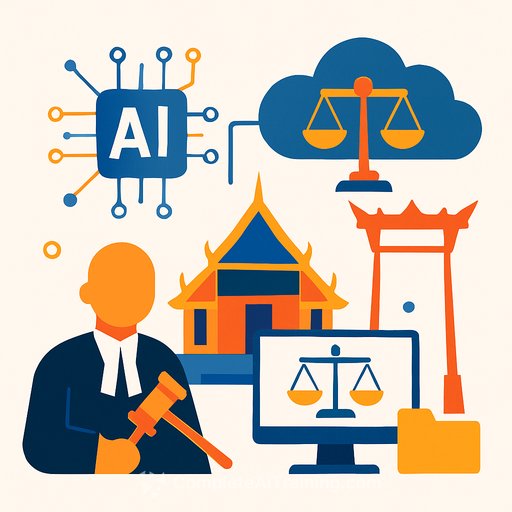
OCS partnered with Microsoft and STelligence to create TH2OECD, an AI-driven legal comparison system running on Microsoft Azure OpenAI. This system analyzes Thai laws against more than 270 OECD legal instruments in real time across languages.
Language barriers, once a major obstacle in aligning Thai legislation with international norms, are now tackled by AI-powered translation and natural language processing. The system automatically translates Thai laws into English and OECD standards into Thai, highlighting differences and helping legal professionals evaluate alignment and suggest updates.
Transitioning from unsearchable PDFs to structured, searchable legal texts on the cloud has made accessing and managing documents efficient. Microsoft 365 and Copilot further streamline collaboration and document updates, allowing teams to work from anywhere.
Mike Yeh, Microsoft Asia’s vice president and deputy general counsel, notes, “OCS’s approach to comparing over 70,000 Thai laws to 276 OECD instruments within a year sets a new standard for innovation and speed in legal modernization.”
Strategic Move for OECD Membership
Modernizing Thailand’s legal framework is a key step toward joining the Organisation for Economic Co-operation and Development (OECD). Membership promises enhanced trade, investment, and cooperation opportunities.
“OECD membership is a commitment to transparency, international standards, and innovation,” Nilprapunt explains. TH2OECD accelerates this process by aligning Thai laws with global best practices efficiently.
Future Directions
- Expanding AI tools to other government agencies
- Integrating legal databases from the Cabinet Secretariat and related bodies
- Creating a centralized legal portal accessible to officials and citizens with AI assistance
These efforts aim to increase transparency and public access to legal information while supporting Thailand’s progress on the global stage.
Nilprapunt concludes, “Our goal is transformation that empowers people—so every law is not just written, but accessible and understood by those it protects.”
For legal professionals interested in AI applications and digital transformation in law, exploring courses on AI tools and automation can provide valuable skills. Resources like Complete AI Training’s automation courses offer practical guidance on integrating AI into legal workflows.
Your membership also unlocks: