AI can fake the format, but it still misses the feeling
AI has beaten us at chess and math. It's getting better at programming, advertising, and even therapy-style replies. But there's a line it still can't cross convincingly: being authentically toxic or emotionally charged on social platforms.
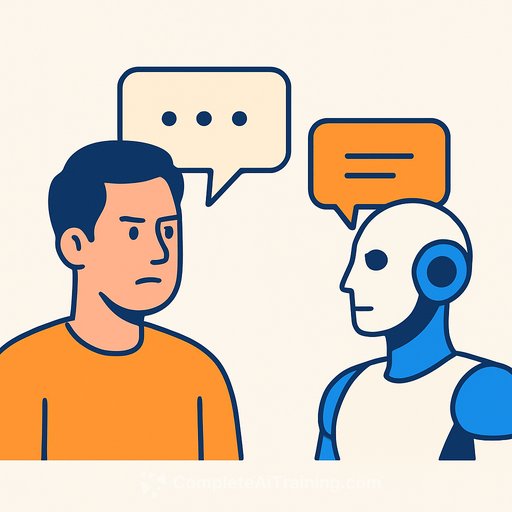
A multi-university study found that social posts from large language models were "readily distinguishable" from human posts with 70-80% accuracy. The biggest tell wasn't grammar or structure-it was tone. AI posts were consistently less toxic, less sharp, and less emotionally expressive than human replies.
What the researchers tested
Teams evaluated nine open-weight models from Apertus, DeepSeek, Gemma, Llama, Mistral, and Qwen (plus a large-scale Llama) across Bluesky, Reddit, and X. Across all three platforms, toxicity scores were lower in AI responses than in human replies. That gap helped classifiers spot machine-written posts far above chance.
Instruction-tuned models were easier to identify as AI. The paper suggests alignment training may introduce stylistic regularities that make text feel more machine-like. Models also struggled more in certain contexts: showing positive emotion on X or Bluesky, and discussing politics on Reddit. Overall, models imitated X better than Bluesky, and Reddit was the toughest due to more diverse conversational norms.
User complaints earlier this year about tone shifts in popular chat models underline the same issue: emotional calibration is hard. Too polite feels fake. Too curt feels cold.
Why this matters for PR and communications
Public conversations run on emotion-humor, tension, empathy, even a little bite. AI can mirror structure (sentence length, word count) but often misses the spark that makes a reply land. That gap shows up most in sarcasm, zingers, and heat-of-the-moment exchanges.
For brand teams, that's a double bind. AI that's "safe" reads bland or sycophantic; AI that's "edgy" risks brand safety. Either way, audiences can often tell.
Practical playbook for PR teams
- Human owns the edge. Use AI for drafts, briefs, and summarizing threads. Keep humans on anything snarky, sensitive, political, or crisis-adjacent.
- Tone lanes, not one tone. Define 3-4 brand "tone lanes" (warm, candid, witty, formal) with examples. Have AI produce variants per lane; pick and polish manually.
- Platform-aware copy. X: short, punchy, timely. Bluesky: similar but less combative. Reddit: context-heavy, community-aware, and allergic to corporate speak. Don't expect one prompt to cover all three.
- Break the AI fingerprint. Ask for 2-3 stylistic takes with different emotional intensity. Insert specific brand anecdotes, customer phrasing, or situational details AI wouldn't know.
- Guardrails that aren't generic. Ban cliches and filler ("We're excited," "our commitment"). Require concrete nouns, active voice, and one unexpected detail per post.
- Measure tone, not just clicks. Track toxicity and sentiment alongside engagement. Watch for "too agreeable" or "too sterile" as leading indicators of AI tell.
- Escalation rules. If the thread is heated, political, or influencer-led-go human. If it's customer support or basic FAQs-AI with review is fine.
Prompting tips that actually help
- "Write 3 variants: calm, candid, witty. Keep it under 220 chars. No platitudes. Use one specific detail from [context]."
- "Reference this past post for voice: [paste]. Avoid repeating phrasing or rhythm."
- "Include one line that shows genuine empathy. No corporate buzzwords."
- "Offer 2 punchier closers. If it sounds like a press release, try again."
What not to outsource to AI
- Clapbacks, sarcasm, or anything that could escalate.
- Political or culture-war topics, especially on Reddit.
- Reactive posts during product incidents or PR flare-ups.
- Community replies where lived experience or local nuance drives credibility.
Bottom line
AI is great at form. Humans still win on feeling. Use models to speed the workflow-drafts, structure, variant generation-but let your team own the emotion, edge, and timing that make public conversations stick.
Level up your team
If you're building a practical AI stack for PR workflows, see our curated options by role at Complete AI Training, or explore certifications for marketing and comms pros here: AI Certification for Marketing Specialists.
Your membership also unlocks: