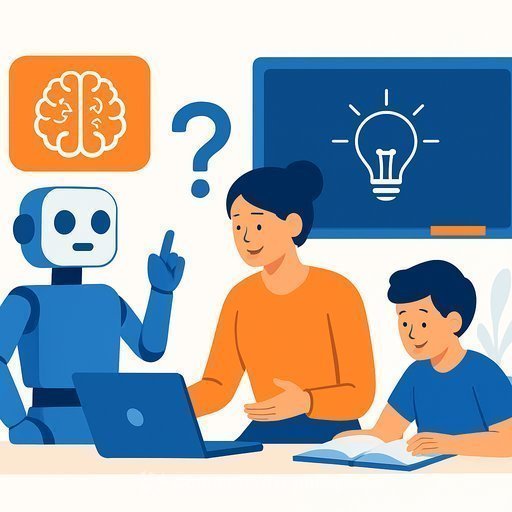
Teaching creativity in the age of AI: What design education must rethink
AI now sits in every studio. It drafts concepts, simulates materials, predicts trends, and renders options in seconds. That's not a threat-it's a clear signal to upgrade how we teach creativity.
The core shift: value moves from execution to thinking. Tools produce output. Designers produce direction, judgment, and meaning.
1) Teach thinking, not tools
Software changes. Thinking compounds. Build courses around problem framing, inquiry, and concept development rather than button-pushing.
- Start briefs with a problem statement, user context, and constraints-then let tools serve the idea, not drive it.
- Assess how students question assumptions, define success, and decide trade-offs.
2) Redefine originality: from making to directing
Originality isn't "from scratch." It's intent made visible through clear direction. Students should learn to guide AI with precision, then refine with taste and ethics.
- Teach prompt clarity, iterative refinement, and critique of outputs. Consider a short module on Prompt Engineering.
- Require students to articulate rationale: why this option, for whom, and why now.
3) Grade the process, not just the polish
AI can make anything look finished. Don't confuse finish with thinking. Pull the curtain back and evaluate the path, not just the poster.
- Score research notes, concept maps, sketches, tests, and decision logs.
- Ask for "what we tried and why we cut it" sections in every submission.
4) Go interdisciplinary by default
Good ideas cross borders. Blend design with tech, culture, psychology, sustainability, and business. The goal is layered thinking, not siloed skill.
- Run co-taught studios: design x data, fashion x materials science, interiors x behavioral insights.
- Have students justify choices with cultural and environmental impact, not just form.
5) Make ethics non-negotiable
Copyright, dataset bias, attribution, consent-these aren't side notes. They are part of the brief. Teach responsible use and clear crediting.
- Use a simple checklist: source rights, bias testing, data privacy, model disclosures, credit policy.
- Reference global guidance like UNESCO's Recommendation on the Ethics of AI to ground discussion.
6) Double down on human qualities
Empathy, storytelling, cultural literacy, and emotional resonance don't come from a model. They come from contact with people and context.
- Send students into the field: interviews, shadowing, community audits, user diaries.
- Require narrative briefs: the human story behind the design and how it informs choices.
7) Update assessment for creative work
Traditional exams reward recall, not originality. Use evaluations that surface thought quality and growth.
- Portfolio reviews with live critique and reasoning.
- Peer feedback rounds and short reflection notes after each milestone.
8) Keep faculty learning
The toolset shifts fast. Faculty should test workflows, share templates, and bring current practice into class.
- Run monthly tool labs and publish shared rubrics for AI-assisted work.
- Invite industry reviewers to critique AI-inclusive projects.
9) Anchor creativity to values
Speed and scale are nothing without direction. Programs should make values explicit-equity, sustainability, cultural respect-and grade for alignment, not just aesthetics.
What to update this semester
- Add a "problem framing and inquiry" unit to first-year studio.
- Introduce an AI-directed concept sprint with strict attribution and reflection rules.
- Revise rubrics to weigh research, iteration, and rationale at least 50%.
- Require an ethics checklist with every submission.
- Integrate one cross-discipline brief per term.
- Train faculty in prompt craft and critique frameworks; see Design for curriculum ideas that blend thinking with tools.
- Adopt a human-centered reference like Google's People + AI Guidebook for project planning.
The bottom line
AI will keep generating options. Educators should keep developing thinkers. If programs focus on concept clarity, ethics, empathy, and cross-field rigor, graduates won't just keep up-they'll lead the brief.
Machines can produce designs. Meaningful creativity still comes from the human mind.
Your membership also unlocks: