AI Agents That Seek and Strike: What Scout AI's Demo Means for Government, IT, and Everyone Else
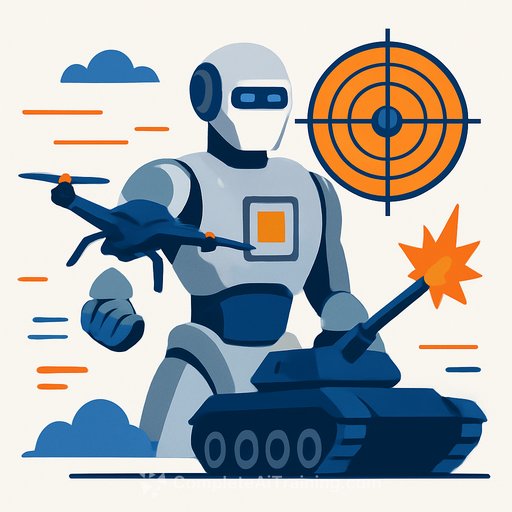
Scout AI is taking the same large-model and agent tech used for coding assistants and automations-and wiring it into drones that can find and destroy targets. A recent live demo showed how fast this is moving from lab talk to field reality.
That shift isn't academic. It changes procurement priorities, testing standards, rules of engagement, and what "human control" actually means. If you work in government, IT, or product development, this is now your problem set.
What actually happened
The company trained large AI models and multi-agent systems to coordinate drones that can identify, track, and strike physical targets. Think tasking, route planning, and target selection handled by AI agents with minimal human input.
The point wasn't just autonomy-it was tempo. AI agents compress the loop from detection to decision to action, and that speed creates new risk if oversight, testing, and fail-safes lag behind.
Why this matters
- General public: Civilian harm risk rises if identification is wrong or controls fail. Transparency and oversight are essential.
- Government: Procurement must align with international law, new doctrine, and verifiable human control-not slide into "automation bias."
- IT and development: You're now shipping safety-critical systems. Model updates, telemetry, and red-teaming can't be afterthoughts.
How these systems work (high level)
Agents sit on top of perception models and planners, often trained in simulation and fine-tuned on real data. The stack handles sensing, goal decomposition, and coordination across multiple assets.
Human control can be "in the loop" (approval required) or "on the loop" (supervision with the option to intervene). The governance choice changes your legal exposure and operational risk.
Main risks to address before deployment
- Misidentification: Data bias, poor edge-case coverage, or distribution shift leads to wrong targets.
- Adversarial interference: Spoofed signals, decoys, or sensor attacks trigger incorrect actions.
- Comms loss and failover: What the system does when it cannot phone home is existential.
- Escalation dynamics: Faster cycles reduce time for human judgment and diplomatic off-ramps.
- Security: Compromise of models, keys, or update pipelines turns your asset into theirs.
- Accountability: Without clear logs and decision traces, investigations stall and trust erodes.
Governance and procurement checklist
- Human control: Define "in/on the loop" in contracts; require a positive consent step for lethal use unless legally justified otherwise.
- Rules of engagement: Hard-code geofencing, no-strike lists, and strict abort conditions; verify they cannot be disabled in the field.
- Legal alignment: Map features and procedures to international humanitarian law and national policy. See the US Department of Defense directive on autonomy in weapon systems for structure and definitions: DoDD 3000.09.
- Independent testing: Require third-party red teaming, scenario stress tests, and field trials that include comms denial, decoys, and civilians in proximity.
- Safety by default: Specify behavior on loss of GPS, degraded sensors, or operator silence (e.g., hold/return/land) with verifiable timers.
- Auditability: Tamper-evident logs of sensor inputs, model versions, prompts/agent goals, and control actions-stored off-vehicle.
- Change control: No live model swaps without approval gates, rollback plans, and post-change validation.
- Supply chain: SBOMs for models and firmware; signed updates; hardware attestation; key management with HSMs.
- Data governance: Document training data sources, exclusion lists, and privacy constraints; maintain dataset versioning.
- Incident response: Define report triggers, stand-down criteria, forensics procedures, and public communication rules.
Technical controls for IT and development teams
- Guardrails: Hard constraints over agent goals; separate perception, planning, and actuation with interlocks.
- Adversarial testing: Test against spoofed beacons, look-alike targets, and sensor perturbations.
- Simulation-to-field gap: Quantify transfer performance; block deployment if gap exceeds thresholds.
- Runtime monitoring: Watchdogs for model drift, confidence spikes, or contradictory signals; auto-escalate to safe state.
- Secure pipelines: Signed model weights, reproducible builds, encrypted telemetry, and strict secrets rotation.
- Rate limits and consent: Throttle autonomous actions; require explicit, logged operator confirmation for lethal effects.
Policy actions and oversight
- Set boundaries now: Decide what tasks must keep human approval. Put that into doctrine and procurement language.
- Common standards: Push for interoperable logs, testing protocols, and certification so allies can verify each other's systems.
- International norms: Track humanitarian guidance and treaty talks; see the ICRC overview of autonomous weapons for context: ICRC: Autonomous weapons systems.
- Transparency: Publish non-sensitive testing summaries and incident statistics to maintain public trust.
Bottom line
AI agents are moving lethal decisions closer to code paths. The tech can compress time and cost, but it also compresses the margin for error. If you buy, build, or approve these systems, your controls must be as fast and as formal as the autonomy you deploy.
Next steps
- Policy and regulatory teams: start with the AI Learning Path for Policy Makers to structure governance and oversight plans.
- IT and engineering leaders: review practices and patterns in AI for IT & Development to harden pipelines, testing, and telemetry.
Your membership also unlocks: