AI didn't break higher ed. Control did.
When ChatGPT arrived, the loudest response across campuses wasn't curiosity. It was control. Professors called generative AI "poison," warned it would kill critical thinking, and pushed for bans. Some reached for oral exams and blue books like rewinding the clock could erase the shift.
This was never about pedagogy. It was about authority.
The integrity narrative masks a control problem
Policies landed fast and messy. Departments published contradictory rules. Guidelines were vague. Enforcement was guesswork even for faculty.
Universities kept repeating "academic integrity" while quietly admitting they didn't share a definition of integrity in an AI-assisted context. Motivation, autonomy, pacing, and the space to try and fail without public embarrassment fell off the agenda. The focus stayed on preserving surveillance, not improving learning. For a sense of how this played out publicly, see ongoing coverage at Inside Higher Ed.
The evidence points in the opposite direction
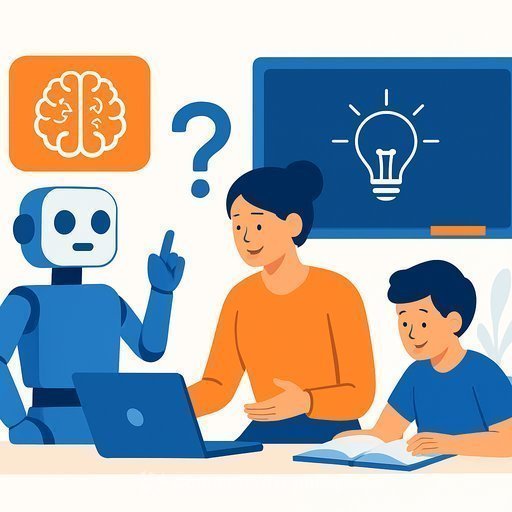
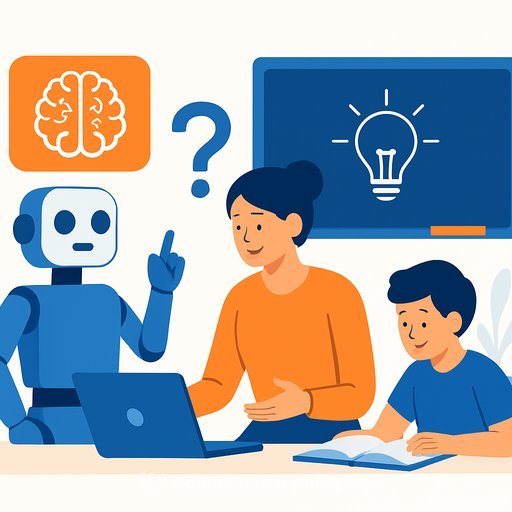
Intelligent tutoring systems can adapt content, generate contextualized practice, and deliver immediate feedback at scale. That's hard to match in a large class. The U.S. Department of Education has already outlined practical uses and guardrails for educators, not blanket bans.
Translation: the tools are getting better. Our systems aren't. If outcomes matter, policy should follow evidence, not fear. See the U.S. Department of Education's guidance on AI in teaching and learning: Artificial Intelligence and the Future of Teaching and Learning.
What to do now: a practical path for educators
- Define "AI use" by assignment type. Create three lanes:
- Prohibited: original research claims, closed-book exams.
- Allowed with disclosure: brainstorming, outlining, editing.
- Encouraged: practice, tutoring, code review, formative feedback. - Require process, not just product. Ask for drafts, prompts used, and a short reflection on what changed. Grade the reasoning, not just the final prose.
- Make AI citation normal. A simple line at the end: "Assistance: tool, version, what it did." Treat it like citing a dataset or calculator.
- Shift assessments toward transfer. Use open-ended prompts tied to class discussions, local context, or data you provide. AI is weaker when tasks require personal synthesis and course-specific sources.
- Use AI as a tutor, not a ghostwriter. Have students generate practice questions, get instant feedback, and iterate. You'll see more reps, faster learning, and clearer gaps.
- Protect privacy and equity. No personal or sensitive data in prompts. Offer approved tools and lab access so students without devices aren't penalized.
- Train faculty weekly. Short demos, simple playbooks, and show-and-tell of what worked. Keep it practical and repeatable.
A simple policy template you can share
- Scope: This policy applies to all coursework unless an instructor provides assignment-level rules.
- Use categories:
- Prohibited: Generating final answers on graded exams or take-home tests; fabricating sources.
- Allowed with disclosure: Brainstorming, outlines, language polishing, code refactoring.
- Encouraged: Concept explanations, practice items, formative feedback, study planning. - Disclosure format: "Tools used, how they were used, prompts, and what changed in my work."
- Evaluation: Emphasis on process artifacts, correctness, citations, and alignment with course materials.
- Misuse: Treated as a standard integrity issue (misrepresentation of work). Clear, tiered consequences.
What to measure instead of panic
- Time to feedback and revision cycles per student.
- Concept mastery on targeted checks tied to course outcomes.
- Engagement: practice volume, office-hour replacements, discussion depth.
- Equity: access to approved tools, performance gaps closing or widening.
Start small this week
- Pick one unit. Allow AI for brainstorming and tutoring. Require a one-paragraph reflection on what students learned and what the tool missed.
- Rewrite one assignment with local data or course-specific sources. Add a process grade worth 30%.
- Run a 30-minute faculty session: three examples, one policy, one rubric update.
Bottom line: Policing preserves control. Teaching builds skill. If we center learning-motivation, feedback, and meaningful practice-AI becomes a lever, not a threat.
Want help building practical AI skills for your role?
Explore focused options for educators in the AI Learning Path for Teachers, browse hands-on resources on ChatGPT in Education, or consult evidence-oriented guidance at AI Research in Education.
Your membership also unlocks: