This Week in Healthcare: OpenAI, Water.org and WHO Foundation
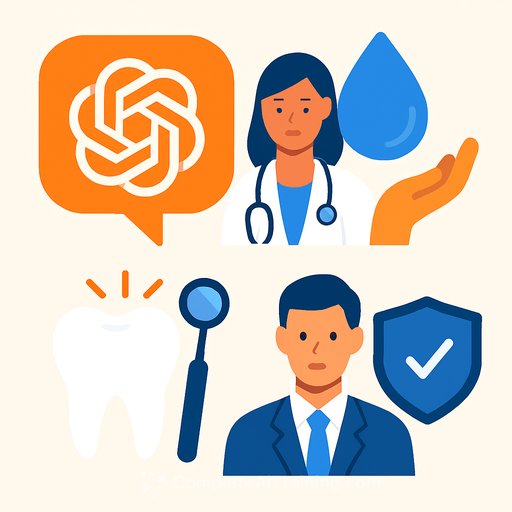
AI at the bedside, safe water and sanitation, global insurance leadership moves, and a renewed push for oral health. Here's what matters for healthcare leaders and operators right now-and how to act on it.
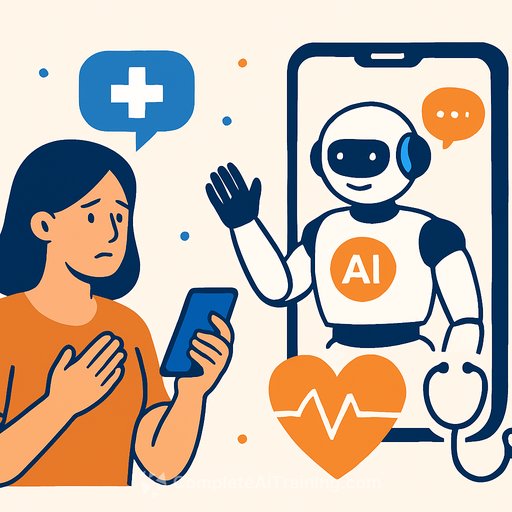
OpenAI's ChatGPT Health: What It Could Mean for Patient Care
OpenAI reports that more than 230 million users ask health questions each week. The company has launched ChatGPT Health, bringing personal medical information together with AI support and additional protections for sensitive data.
If you're evaluating this for clinical use, treat it like any tool that touches protected health information. Aim for quick, tightly scoped pilots with clear guardrails.
- Governance: Define use cases (triage guidance, education, documentation support). Prohibit diagnostic decisions without clinician oversight.
- Data protection: Confirm HIPAA/PHIPA/GDPR posture, access controls, audit logs and de-identification pathways.
- Clinical safety: Require human-in-the-loop review, bias testing on local populations and continuous error monitoring.
- Workflow: Test EHR integration, measure time saved per task and set escalation rules for uncertainty or red-flag symptoms.
- Change management: Train staff, provide clear disclaimers for patients and create a feedback channel for rapid iteration.
Water.org, Amazon and Ecolab: Safe Water and Sanitation as Core Health Infrastructure
About 2.1 billion people lack safe water and 3.4 billion lack safe sanitation-conditions linked to cholera, dysentery and diarrhoea. Water.org's "Get Blue" initiative, announced at Davos, puts water systems back at the center of public health and local economies.
For healthcare systems serving resource-limited communities, WASH is a direct clinical outcome lever, not just a social determinant.
- Hospital operations: Prioritize reliable water in maternity, NICU and dialysis units; track HAI rates versus WASH uptime.
- Community strategy: Pair vaccination and maternal-child health programs with household water and sanitation interventions.
- Financing: Explore blended funding with NGOs and payers to reduce avoidable admissions and antimicrobial use.
Water.org: The global water crisis
OpenAI for Healthcare: Practical Ways to Improve Clinical Workflows
OpenAI's recent healthcare push signals a product-first mindset: scale fast, ship usable tools and iterate. For providers and payers, that means moving beyond pilots that never leave the sandbox - and following best practices from our AI for Healthcare resources.
- Start with measurable friction: symptom intake, discharge instructions, prior auth packets, care-gap outreach.
- Instrument everything: track time saved, message quality, readmission risk flags and patient comprehension scores.
- Build a feedback loop: weekly reviews with clinicians and IT to retire bad prompts and standardize what works.
If your team needs structured upskilling to run safe pilots and measure impact, see our role-based learning paths: AI Learning Path for Training & Development Managers.
Allianz Partners: New Health Leaders and What to Watch
Allianz Partners named four senior leaders in its Health business. With operations in 70+ countries and tens of millions of cases handled annually, leadership shifts at this scale can ripple through international benefits and assistance models.
- Cross-border care: Expect continued growth in virtual-first navigation and medical assistance for expatriates and travelers.
- Contracting: Watch for new bundles across telehealth, second opinions and evacuation coverage that affect provider negotiations.
- Data sharing: Clarify documentation requirements early to keep claims flowing and cut admin time for care teams.
Colgate-Palmolive and WHO Foundation: Bringing Oral Health Back Into Primary Care
Oral diseases affect 3.7 billion people and remain one of the most overlooked noncommunicable burdens. A new multi-year collaboration will support WHO's oral health work, with a focus on education and awareness.
- Primary care: Add oral health screening to routine visits, diabetes management and prenatal care; script simple self-care counseling.
- Pediatrics: Standardize fluoride varnish and referral workflows; integrate oral outcomes into quality dashboards.
- Community: Pair school-based programs with mobile clinics to reach high-need areas.
Bottom Line
- AI in care: Start small, protect data, keep clinicians in control and measure outcomes that matter.
- Public health basics: Water and sanitation upgrades are clinical interventions-budget and track them that way.
- Market shifts: Payer and assistance leadership changes can alter reimbursement and referral patterns-stay close to your contracts.
- Oral health: Treat it as core primary care, not an afterthought.
Your membership also unlocks: