Anthropic's $1.5B Payout: What It Means for Working Writers
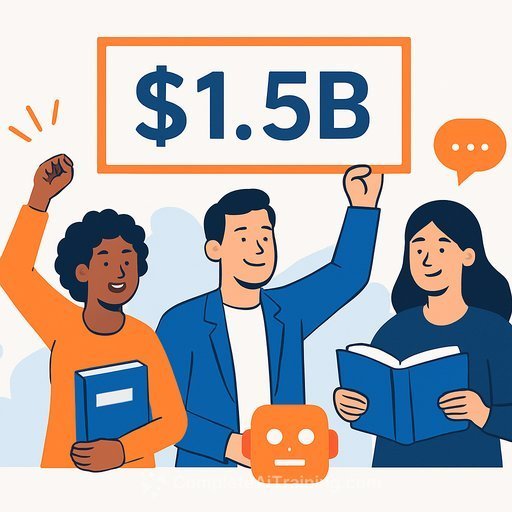
Anthropic agreed to pay $1.5 billion after using pirated copies of hundreds of thousands of books to train its Claude chatbot. The math pencils out to roughly $3,000 per title, split between author or estate and publisher. It won't make anyone whole, but it's the first real money many writers have seen for the unlicensed use of their work.
For Montana writers, the news hits close to home. Anthropic's training set included works by a long list of Montana authors and estates - living and deceased - without permission.
Who's Eligible - And Your Deadline
Writers and publishers who hold U.S. copyrights have until March 23 to file a claim. Notices were supposed to go out in late November, but some eligible authors report they never received one. If you hold rights, assume the burden is on you to check.
- Estimated payout: ~$3,000 per title, split 50/50 with your publisher (or as your contract dictates).
- Estates and co-authors can file; gather contracts and ISBNs before you start.
- Expect taxes and potential agent/royalty splits, depending on existing agreements.
Montana-linked names in the dataset include Stephanie Land, Tom McGuane, David Quammen, Kevin Canty, Deirdre McNamer, David James Duncan, Malcolm Brooks, Doug Peacock, Douglas Chadwick, and Michael Punke. Estates and publishers of A.B. Guthrie Jr., William Kittredge, Richard Hugo, and James Welch are also eligible.
How Anthropic Used These Books
AI Research and product teams rely on large, coherent texts to improve models. To do that, the company trained its models on books scraped from pirate libraries such as Library Genesis and Pirate Library. Books are attractive training data because they're edited, structured, and coherent - unlike much of the open web.
Data scientists involved in model training can consult the AI Learning Path for Data Scientists for guidance on ethical data practices and responsible training workflows.
A federal judge concluded Anthropic could not use pirated sources and approved the settlement. The order requires Anthropic to destroy copies of the pirated books and makes clear this isn't a licensing deal. As lead plaintiff Andrea Bartz put it: "It does not give them any right to use our books going forward."
Fair Use: Where The Line Was Drawn
The court also addressed a separate question: training on legally acquired books. On that point, Judge William Alsup held that training on lawfully obtained works can be "transformative" and fall under fair use. Translation: the payout covers the pirated copies; it doesn't block future training if companies get the texts through legal channels or licenses.
Copyright law and AI are moving targets. Dozens of related cases and negotiations are still in play. For background on author rights, see the Authors Guild and the U.S. Copyright Office's guidance on registration at copyright.gov.
What Montana Writers Say
For many, the check matters less than the cultural cost. Jamie Harrison - daughter of the late Jim Harrison - noted that the bot still can't capture her father's bite: he'd have chosen "something truly offensive" over a tidy line like "Silicon Valley's latest gold rush." Her concern is larger: "It's like damming a river" when AI becomes the voice responding to readers.
Stephanie Land warned about replacing lived experience with generic output: relying on "voices that are not human" erodes how communities inform themselves. Annick Smith sees AI as a shortcut that lets people avoid thinking for themselves - a loss for culture as a whole. And Doug Peacock, whose "Grizzly Years" is on the list, put it simply: the sentences come from a place you have to have lived. A machine can't fake that.
What To Do Now: A Short, Clear Playbook
- Verify eligibility: If you hold rights to any title, confirm whether it appears in the settlement list. Don't assume a notice will arrive.
- File the claim: Submit by March 23. Have ISBNs, contracts, and rights data ready. Coordinate with your publisher or agent.
- Check your contracts: Review grant-of-rights clauses, reversion triggers, and any language on data mining, machine learning, or "synthetic" uses.
- Add AI clauses going forward: Ban unlicensed data-mining, set approval requirements for any training use, and define price floors for licensing.
- Register your works: Registration strengthens remedies. Keep records of editions and co-rightsholders. See copyright.gov.
- Monitor and act: Send takedowns to pirate libraries. Track impersonations and lookalike prompts. Document evidence before sending notices.
- Join collective efforts: Stay current on litigation and negotiations via the Authors Guild and your professional organizations.
A Note On Voice, Ethics, and Imitation
One boundary is getting clearer: imitating a specific living or deceased writer's voice crosses a line for many authors and estates. Even some AI tools are refusing requests to mimic named writers. It's a small step, but it points to a norm the industry can enforce in contracts, prompts, and platform policies.
If you use AI in your workflow, protect your signature. Never prompt with unpublished drafts, watermark your final text where feasible, and disclose assistive use when it matters to editors or clients. Your voice is your asset - don't feed it to a system you don't control.
Big Picture
This settlement sends a message: companies can't build on stolen books and call it progress. At the same time, fair use creates a path for training on legitimately obtained works. That tension won't resolve overnight.
Writers can do two things at once: claim what's owed, and set terms for the future. File your paperwork. Tighten your contracts. And keep the human voice where it belongs - at the center of the work.
Your membership also unlocks: