3 Questions Teachers Can Use to Assess AI Use in Student Work
The Scottish Qualifications Authority (SQA) has released new guidance to help teachers determine when the use of generative AI (GenAI) tools is appropriate in student assessments for the 2025-26 academic year. This guidance includes subject-specific examples but stresses that creating an exhaustive list of acceptable and unacceptable uses isn’t possible.
Clear Examples from Music and Other Subjects
One practical example involves secondary school music assessments. Students can use AI to write lyrics for the composition part of National 5, Higher, and Advanced Higher levels because no marks are awarded for lyrics creation. However, using AI to write the composing review—which requires students to explain their creative decisions and reflect on their work—is not allowed, as this section contributes directly to the final grade.
Similar examples cover subjects such as English, computing science, business education, and physics, offering teachers concrete scenarios to consider when evaluating AI use.
The Three Guiding Questions
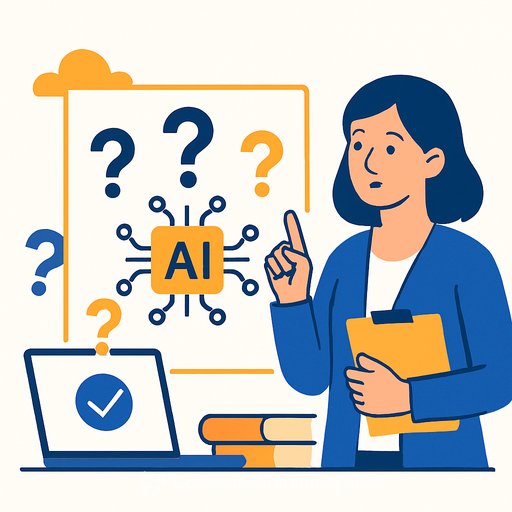
To help teachers make informed decisions about AI use in assessments, the SQA recommends asking these three questions:
- Will the use of GenAI tools substitute for the acquisition of key skills, knowledge, and understanding by learners?
- Will the use of GenAI tools undermine the need for learners to demonstrate genuine evidence of their skills, knowledge, and understanding?
- Are marks awarded for the activity which will be undertaken by GenAI?
If the answer is “yes” to any of these, AI use for that specific purpose should be considered unacceptable—unless assessment arrangements have been agreed upon in advance.
Supporting Teachers Without Adding Burden
Donna Stewart, SQA’s director of qualifications development and Scotland’s chief examiner, emphasized that the guidance aims to clarify expectations without imposing new responsibilities on teachers. The SQA does not endorse or require AI tool use but recognizes their growing accessibility and the need for a clear framework.
Stewart also notes the limitations of GenAI tools, which may not always provide reliable or accurate outputs, reinforcing the importance of teacher judgment in their application.
Ongoing Support and Feedback Opportunities
To support educators further, the SQA plans online Q&A sessions before the new school year starts in August. These will provide opportunities for teachers to ask questions and share feedback on the guidance.
The current approach to AI use in assessments will remain in place throughout the 2025-26 academic year, giving schools time to adapt and establish best practices.
For educators looking to deepen their understanding of AI tools and how to incorporate them responsibly in teaching, courses on effective AI use and prompt engineering can be found at Complete AI Training.
Your membership also unlocks: