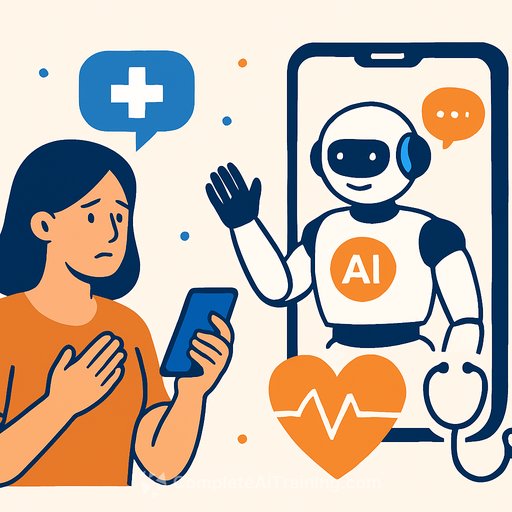
Tian Ruixiang targets AI-led healthcare leadership across Asia-Pacific with Singapore partnerships and acquisitions
Beijing/Singapore - Feb. 12, 2026. Tian Ruixiang Holdings Limited (NASDAQ: TIRX) announced it is in advanced talks to partner with and acquire Singapore's top three medical technology leaders. The goal: connect proven AI diagnostics with a cross-border clinic and insurance network spanning Southeast Asia and the broader Asia-Pacific.
If completed within the next 12 months, this move would bring Singapore's AI diagnostic capabilities directly into TIRX's clinic-insurance ecosystem. For providers and insurers, that means faster triage, earlier disease detection, and cleaner data flow from intake to claims.
The deal at a glance
- Scope: Strategic partnership plus acquisitions involving three leading Singapore medtech firms.
- Timeline: Target close within 12 months, subject to regulatory approvals and shareholder consent.
- Outcome: A unified AI healthcare platform connecting clinics, labs, and insurers across Asia-Pacific.
What the integration delivers
- AI diagnostic precision: Predictive models projecting 95%+ accuracy for early detection across select conditions, embedded inside clinic workflows.
- Cross-border care continuity: Real-time data integration across sites, incorporating genomic analysis and personalized treatment pathways.
- Operational lift: Automation of up to 70% of routine workflows and more than 40% cost reduction across admin-heavy processes.
Why this matters for providers and insurers
Clinical operations run on thin margins and fragmented data. An integrated stack-screening to diagnosis to claims-reduces waste and shortens time to treatment.
- Providers: Earlier detection, fewer duplicative tests, and tighter care coordination.
- Insurers: Stronger risk selection, faster straight-through processing, and clearer audit trails.
- Patients: Quicker answers, consistent care across borders, and fewer administrative loops.
Execution priorities for healthcare and insurance teams
- Data readiness: Map current EHR, claims, imaging, and lab data. Define interfaces and FHIR/HL7 needs. Establish a single source of truth.
- Governance: Set model oversight, drift monitoring, and outcome tracking. Document clinical validation and audit logs.
- Privacy and compliance: Align with Singapore's PDPA and cross-border transfer rules. See PDPC guidance.
- Clinical safety: Put in place human-in-the-loop checkpoints and fail-safes. Track false positives/negatives at service-line level.
- Change management: Design and redesign intake, triage, referral, and claim steps around AI outputs. Train frontline and back-office teams.
- ROI model: Tie KPIs to readmission rates, time-to-diagnosis, cost per claim, and denial rates.
90-day implementation checklist
- Pick 2-3 high-yield pathways (e.g., oncology screening, cardiometabolic risk, radiology triage) for pilot.
- Stand up secure data pipelines and role-based access. Log all model inferences for audit.
- Set baseline metrics and outcome definitions with clinicians and actuaries.
- Run A/B workflows: AI-assisted vs. control. Review variance weekly, adjust thresholds, and update playbooks.
What to watch over the next 12 months
- Regulatory milestones and closing conditions for the transactions.
- Integration progress across EHR, imaging, lab, and claims systems.
- Clinic rollout cadence and cross-border data interoperability.
- Pricing models for AI-supported services and reimbursement mechanics.
- Clinical outcome reporting and independent validation of accuracy claims.
Leadership statements (summarized)
Company leadership frames this as a step-change: bringing Singapore's precision AI to a wider clinical and insurance network, with diagnostics that feel proactive and personal. The thesis is simple-better detection, smoother operations, and broader access across the region.
Risk and governance notes
- Accuracy claims must be disease- and population-specific; expect variance by modality and site.
- Bias and representativeness need ongoing monitoring, especially in multi-country deployments.
- Cross-border data requires strict consent, encryption, and lawful transfer mechanisms.
- Human oversight remains essential for edge cases and high-stakes decisions. See WHO guidance on AI in health ethics and safety here.
About Tian Ruixiang Holdings Limited
Tian Ruixiang (NASDAQ: TIRX) develops AI-driven solutions spanning insurance and healthcare operations. The company positions its ecosystem to raise Productivity and surface new economic value across underwriting, clinical workflows, and claims.
Upskilling for healthcare and insurance teams
If your team is building practical AI capability for clinical ops, underwriting, or claims analytics, explore curated paths by job role at Complete AI Training.
Disclaimer: This article summarizes company statements and public information for operational insights. It is not investment advice.
Your membership also unlocks: