
AI news ·
Tighter export controls, not dialogue, are the path to AI safety with China
Trump plans to discuss AI safety with Xi Jinping, but experts warn the talks could backfire without tighter export controls. China's 2024 AI dialogue focused on chip access, not safety.
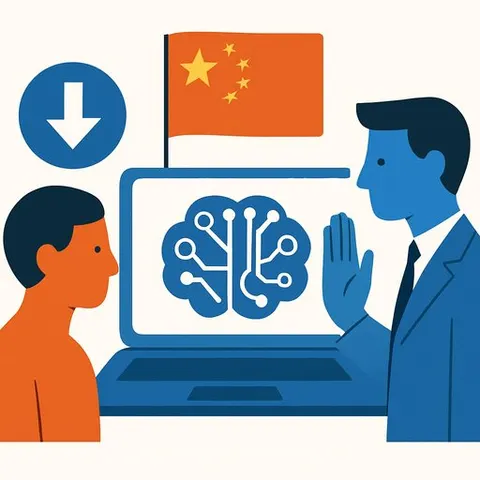
Trump Should Pair AI Talks With China With Tighter Export Controls
President Donald Trump plans to discuss artificial intelligence with Chinese President Xi Jinping in Beijing. The two countries are considering a formal dialogue on AI safety. But the United States should not expect good faith negotiations from Beijing without simultaneously tightening export controls that restrict China's access to advanced computing technology.
China has long sought AI safety talks with the United States, but not for the stated reasons. Beijing views these discussions as a way to gain access to technology it needs to close an eight-month gap with U.S. AI capabilities. The Chinese government's primary concern is falling behind, not preventing misuse by non-state actors.
The 2024 AI safety dialogue between the two countries illustrated this dynamic. U.S. officials sent technical experts to discuss shared risks. Chinese representatives sent diplomats who complained about American export controls on AI chips.
China's Track Record on Commitments
China has shown little willingness to honor international commitments that constrain its own development. The country views arms control agreements with skepticism, informed by its history of non-compliance and by military strategists who describe arms control as a tool great powers use to protect advantages.
Unlike U.S. and Russian leaders, who experienced the Cuban Missile Crisis and gained a visceral understanding of the need for restraint, Chinese leaders lack a comparable near-catastrophe. That absence shapes their approach to negotiations.
China is also aggressively stealing U.S. AI technology. Methods include smuggling advanced chips, conducting "distillation attacks" against U.S. models to replicate their capabilities, and exploiting loopholes in existing export controls.
The Only Effective Strategy
The United States has three options. It could loosen export controls and hope China complies with any agreement. It could wait for a catastrophic event to force Chinese cooperation. Or it could pursue maximum pressure by tightening controls while establishing a narrowly focused dialogue.
The third approach is the only responsible one. If the U.S. expanded its AI lead from eight months to 18 or 24 months-an eternity in AI development-China would face different incentives. Beijing would be more likely to accept even modest constraints if it feared U.S. superiority posed a threat to its own security.
China remains extremely dependent on U.S. computing power. Chinese firms will produce only about 2 percent of the computing power that U.S. firms generate this year. Computing power is the most critical input for AI development, and the requirements grow exponentially as models advance.
Closing the Loopholes
Current U.S. export controls contain significant gaps. China can purchase chips through third countries, access them remotely via cloud services, or use U.S. chipmaking technology to manufacture them domestically. These loopholes are policy choices, not inevitabilities.
If Trump establishes an AI dialogue with China, he should make clear it will focus exclusively on safety issues and exclude export controls. Simultaneously, the administration should implement export controls that eliminate existing loopholes and maximize the U.S. advantage.
Just as the United States and Soviet Union never assisted each other's nuclear weapons programs, the United States should not assist China's AI development.
The alternative is to gamble U.S. security on Chinese goodwill or wait for disaster to change Beijing's calculation. Maximum pressure paired with dialogue preserves American AI leadership while creating the conditions for genuine cooperation later.
For government professionals navigating AI policy and strategy, understanding these dynamics is essential. Learn more about AI strategy for policy makers and explore resources on AI for Government.