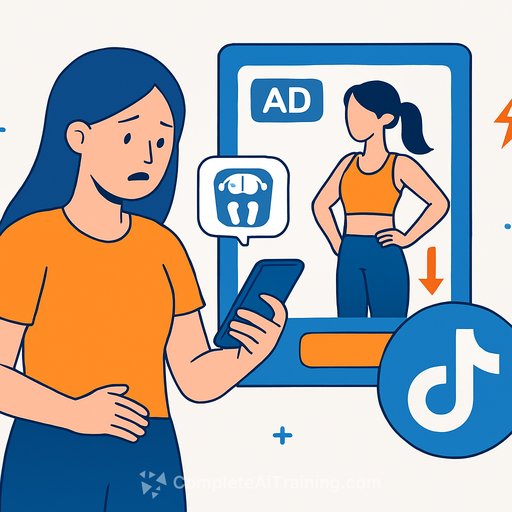
Fake AI Ads Are Flooding TikTok. Here's What Marketers Need To Do About It
Paid social runs on scale, speed, and creative volume. That same engine is now fueling a surge of AI-generated scam ads on TikTok-many pushing fake health products and linking to cloned ecommerce sites.
TikTok's ad business depends on velocity. That velocity is now being used against the platform's own policies as AI-made spots slip past filters and moderation. The risk for brands: brand safety incidents, wasted budget, and regulatory exposure.
What's Actually Happening
ByteDance has poured billions into AI, with reports of a $12bn spend on AI chips in 2025. In parallel, AI-made ads have spiked-especially quick-hit spots promoting bogus weight-loss products.
Common patterns include "GLP-1 patches" marketed as slimming aids (with no GLP-1 in them), miracle fixes for "cortisol belly," and links to cloned pharmacy sites impersonating trusted retailers. The creative looks clean, the pitch sounds confident, and the checkout page is fake.
TikTok's Own Tools Lower The Barriers
Through TikTok for Business and its Symphony Creative Studio, anyone can spin up ads in minutes using AI scripts, avatars, voiceovers, editing, translation, and dubbing. The assistant will suggest and assemble creative that's ready for promotion.
TikTok says Symphony outputs are labeled "AI-generated" and all ads go through moderation. In practice, harmful ads still appear, and scammers can export TikTok-made assets to run on other platforms or sites without friction.
The Policy Gap
TikTok's ad rules prohibit deceptive practices and health misinformation. The company says it removes content that could harm health decisions and restricts ads with exaggerated claims.
Yet the feed keeps surfacing fast-made, AI-produced ads that break those rules. Weak filtering and sheer creative volume create openings for abuse.
Regulators Are Watching
EU officials have emphasized the need for guardrails and enforcement under the AI Act. Expect more scrutiny on AI transparency, health claims, and consumer protection across social platforms.
If you operate in the EU, build for compliance now. Don't wait for an audit to tell you what your playbook should have covered months ago.
Your Brand Safety Playbook (Use It Now)
- Lock down high-risk claims: Ban weight-loss, medical, or supplement claims unless you have clinical substantiation, legal sign-off, and clear disclosures. Prohibit "GLP-1" language unless you can prove it and it's legal.
- Tighten media buying: Use allowlists for placements, creators, and inventory types. Disable sketchy placements. Add strict exclusions and negative keywords around medical shortcuts and miracle outcomes.
- Verify every domain: Only link to owned, verified domains. Block URL shorteners in ads. Require DNS, SSL, and DMARC checks for any partner domain. No exceptions for affiliates.
- Enforce AI transparency: If AI helps create an ad, label it, log who/what generated it, and store prompts, versions, and approvals. Keep creative provenance records for 24 months.
- Creative QA checklist: Fact-check all health or performance claims. Ban phrases like "no prescription needed" or "clinically proven" without proof. Add a "disallowed claims" list to pre-publish checks.
- UGC and influencer controls: Vet creators, require #ad and brand safety clauses, and get raw files before publishing. Add penalties for unapproved edits or risky health promises.
- Continuous monitoring: Track comments, DMs, and complaint spikes. Set alerts for brand mentions + "scam," "fake," "refund," and "pharmacy." Route takedown requests within hours, not days.
- Incident response: If a scam surfaces, pause spend, capture evidence, report through TikTok's channels, and publish clear guidance on official domains and products. Re-verify all active ads.
How To Use TikTok's AI Without Getting Burned
- Let Symphony draft variations, but make legal and medical review mandatory for sensitive categories.
- Disable risky prompts in internal playbooks. For example: no "weight loss," "GLP-1," or "appetite suppressant" creative without approval.
- Whitelist approved avatars and voices; ban photoreal human lookalikes for health or finance topics.
- Require final human review before launch. No auto-publish from AI tools.
Red Flags Your Team Should Catch In Seconds
- "GLP-1 patch" or any product claiming Rx-grade results with zero medical supervision.
- "No prescription needed," "not tested," or promises of a "flat stomach in days."
- Near-human avatars with off lip sync or overly smooth skin and lighting.
- Cloned retailer logos, mismatched currencies, or domains with odd hyphens and typos.
- Disabled comments, countdown timers, and aggressive scarcity language.
Compliance Notes For EU Marketers
- AI transparency: Be ready to disclose AI use in ad creation and keep evidence of how content was produced.
- Claims substantiation: Keep clinical or legal proof on file for any health-related statement.
- Youth protections: Treat weight-loss content as sensitive; apply strict age gating and audience filters.
- Documentation: Maintain an audit trail: briefs, prompts, model/tools used, review steps, approvals, and flight dates.
Helpful References
Upskill Your Team
If your marketing org needs a clear, ethical workflow for AI-made ads-prompting, review, and compliance-consider structured training. A focused path helps reduce risk and speeds up approvals.
AI Certification for Marketing Specialists
AI can help you ship more creative, faster. Guardrails make sure it doesn't ship you into a crisis.
Your membership also unlocks: