TIME Hotels Accelerates AI Strategy for 2026: Practical Moves Hospitality Leaders Can Copy
TIME Hotels is placing AI and digital transformation at the center of its 2026 growth plan. Leaders can find similar executive-level playbooks in AI for Executives & Strategy.
What's changing-and why it matters
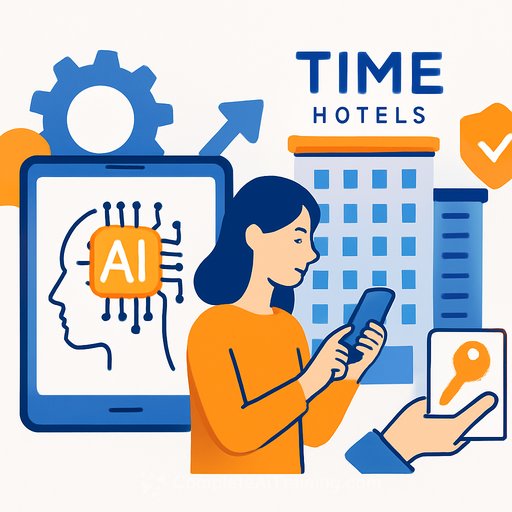
The playbook is clear. TIME Hotels is moving to end-to-end digitalisation across the guest lifecycle, with mobile-first, AI-supported, and self-service features baked into core operations. Direct booking platforms are being upgraded for better UX and smarter conversion, cutting friction and dependency on intermediaries.
Behind the scenes, the group is strengthening cybersecurity and data governance. On property, IoT is being used to streamline operations, optimise energy use, and support long-term sustainability targets. This is practical tech with measurable outcomes, not vanity projects - for comparable operational use cases see AI for Operations.
AI as an operations tool-not a replacement for people
CEO Mohamed Awadalla positions AI as support for better decisions, steadier service, and deeper guest engagement. The focus is human-first service with smarter systems doing the heavy lifting in the background. That includes real-time personalisation, portfolio-wide consistency, sharper revenue and distribution calls, and tighter operational planning.
Automated pre-arrival messages, in-stay alerts, and post-stay feedback loops reduce wait times and close gaps. Frontline teams spend less time chasing information and more time with guests.
The tech stack: unified, connected, scalable
TIME Hotels continues to integrate PMS, CRM, loyalty, reservations, and guest touchpoints into one connected stack. A partnership with Shiji Group delivers a unified, cloud-based PMS for faster arrivals and departures, centralised guest profiles, and streamlined back office work. That's the foundation for accuracy and speed at scale.
On the commercial side, the group uses Amadeus GMS for CRM and loyalty to manage the full guest lifecycle through personalised, automated engagement. An upgraded booking engine and mobile-optimised website back this up with a cleaner, more direct path to purchase.
With stronger data integrity, better forecasting, and clearer reporting at property and group level, decisions get faster-and more consistent-without losing the personal touch.
Growth markets and brand architecture
TIME Hotels operates across the UAE, Qatar, Saudi Arabia, and Egypt today, with new openings planned in Saudi Arabia, Tanzania, Morocco, and the Indian Ocean. The brand portfolio covers multiple segments: VIVI by TIME (lifestyle), HALO by TIME (premium upscale), and Rotella (luxury with local character).
Residential offerings are being sharpened into three tiers-TIME Residences Classic, Executive, and Premium-built for both extended and short stays. The structure allows the group to expand across markets without diluting service standards.
What hospitality leaders can implement now
- Unify your data: consolidate PMS, CRM, and loyalty so guest profiles and preferences move with the guest.
- Go mobile-first: enable mobile check-in/out, payment, digital keys, and service requests with clear fallbacks for non-digital guests.
- Automate the basics: pre-arrival confirmations, in-stay service prompts, and post-stay surveys with smart routing to teams.
- Strengthen data governance: consent tracking, access controls, audit trails, and clear data retention policies.
- Use AI where it pays: demand forecasting, rate and channel recommendations, service recovery flags, and sentiment analysis.
- Deploy IoT where costs are rising: energy monitoring per occupied room, predictive maintenance for HVAC and laundry, smart lighting.
- Invest in the booking path: faster loading pages, simplified forms, saved preferences, and relevant offers that don't add friction.
- Train your teams: frontline staff need playbooks for AI-assisted workflows so service stays personal, not scripted.
Metrics to watch
- Direct booking conversion rate and mobile share
- Average digital check-in/out time
- Energy consumption per occupied room
- RevPAR and channel mix shifts after AI-assisted pricing
- Service ticket resolution time and first-contact resolution
- CSAT/NPS by segment and property
- Data completeness and match rate for guest profiles
Why this approach is working
It balances human service with system reliability. Standardisation reduces errors; data makes decisions clearer; automation cleans up repetitive tasks; teams spend their time on high-value guest moments. For groups operating across regions and brands, that's how you scale without losing the personal feel guests remember.
Where TIME Hotels is heading
The 2026 strategy is built to support multi-market growth with consistent standards and measurable returns. As AI and analytics mature inside the organisation, expect tighter revenue performance, smoother operations, and a more predictable guest experience-regardless of market or brand.
Want to upskill your team on practical AI for hospitality? Start with the AI Learning Path for VPs of Strategy.
Your membership also unlocks: