Today in AI for Marketers: Nvidia-Groq deal, AI grows up in marketing, and verifying AI visuals
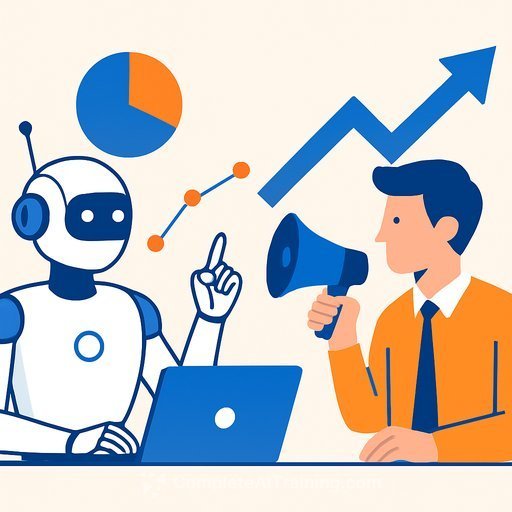
AI is no longer a side project. It's baked into how campaigns are planned, funded, and measured. Here are the headlines-and the moves to make-so your marketing stays a step ahead.
Nvidia to license Groq tech and hire senior execs
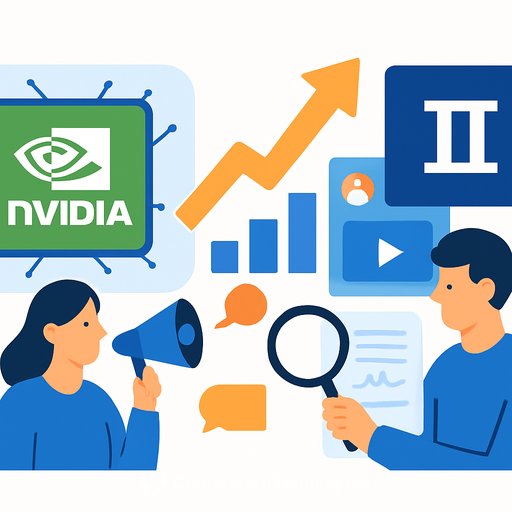
Nvidia agreed to license chip technology from Groq and bring on several senior leaders, including the startup's chief executive. The company referenced the deal in a blog post; coverage frames it as a Big Tech-style way to access tech and talent without a full acquisition, per a Reuters report.
- Why it matters for marketers: More compute options can translate to faster, cheaper AI features in the tools you use-creative generation, media modeling, and analytics.
- What to watch: Pricing and performance updates from your ad, analytics, and creative vendors. Ask how their inference costs and speeds are changing in 2025.
- Action: Revisit SLAs with AI-heavy platforms this quarter. If models get faster, renegotiate throughput, latency, or credit usage to match.
2025: The year AI stopped being a toy in marketing
This year, AI moved from novelty to the operating layer behind decisions. The visible changes were in creative production; the bigger shift was upstream-idea scoring, experiment design, budget justification, and accountability.
- How teams changed: Briefs start with model-informed assumptions. Experiments run more often with tighter loops. Budgets move based on predicted lift, not opinion.
- Do this now: Pick one high-volume decision (creative variants, audience mix, or bid strategy). Automate the recommendation step, and make a human do the approve/deny step with a clear KPI threshold.
- Set guardrails: Define "AI can decide" vs "Human must approve." Log every AI-assisted decision, the data used, and the outcome. Review weekly.
- Upskill fast: Standardize prompts, testing templates, and QA checklists. If your team needs a structured path, consider the AI Marketing Manager Learning Path.
- Leadership and governance: For frameworks on budgets, decision design, and cross-unit adoption, leaders can follow the AI for Business Unit Managers Learning Path.
How to verify AI-generated images and videos with Google's Gemini
AI visuals are everywhere, and many carry invisible markers. Google says Gemini can check for hidden AI watermarks embedded in files.
- Quick check: Open Gemini, upload the image or video, and ask it to analyze for hidden AI watermarks or identifiers. If supported, it will report what it finds.
- Use multiple signals: Watermark detection is one signal, not final proof. Cross-check with metadata, source provenance, and a second tool when stakes are high.
- Helpful resources: Learn how watermarking works with Google DeepMind's SynthID and open provenance efforts like Content Credentials (C2PA).
- Team process: For newsy or sensitive campaigns, require a verification step before publishing. Document the check in your asset tracker. For practical training on AI-driven creative production and tooling, see AI Design Courses.
Bottom line for marketers
- Expect faster AI features as chip competition heats up-push vendors for concrete ROI.
- Make AI the default for proposing options; make humans the final filter on risk and spend.
- Guard your brand with media verification steps built into your content workflow.
Tags: Artificial Intelligence, Digital Technology
First Published on Dec 26, 2025 5:46 PM
Your membership also unlocks: