
AI news ·
Top CMOs shift from isolated AI tools to end-to-end workflows as marketing pressure grows
Most CMOs use AI to speed up existing tasks. The ones pulling ahead are connecting marketing and product data into unified workflows that shape messaging and conversion simultaneously.
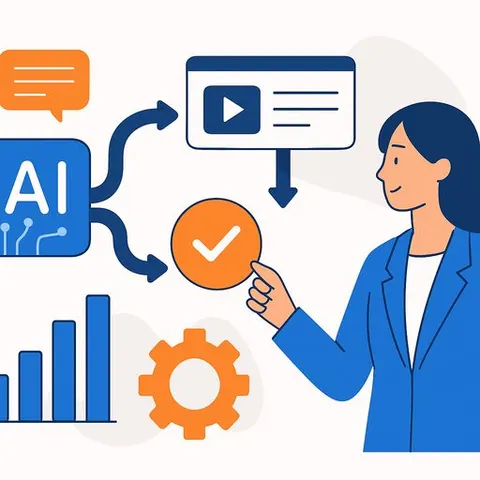
Most Marketers Are Using AI to Do More. The Best CMOs Are Using It to Do Something Different
Marketing leaders are deploying AI to generate content and answer emails. Meanwhile, their teams face mounting pressure to prove value faster. The disconnect is widening: isolated AI tools that simply boost output aren't enough.
The CMOs pulling ahead are building end-to-end AI workflows that connect separate functions into a single system. They're breaking down walls between departments instead of optimizing individual tasks.
How product and marketing are converging
The shift starts with aligning marketing messaging and customer journeys directly to the product itself. Traditional marketing funnels treat the product experience and the marketing path as two separate halves that touch but don't overlap.
Leading marketers are closing that gap. They're embedding the product directly into the marketing experience so prospects can test it before deciding to buy.
This approach has concrete advantages. The product communicates its own value. A prospect can evaluate usability, speed, and results firsthand. The product experience becomes a conversion driver on its own - influencing purchase decisions, subscription commitments, and word-of-mouth recommendations.
When AI connects marketing and product data across the entire customer journey, teams can optimize both simultaneously. A prospect's interaction with a product feature informs what messaging reaches them next. Their behavior in the product shapes the marketing funnel in real time.
What this means for marketing teams
Teams still using AI for isolated tasks are falling behind. The question isn't whether to use AI - it's whether you're using it to do the same things faster or to do fundamentally different things.
For guidance on structuring AI across marketing functions, see the AI Learning Path for CMOs. Teams looking to understand broader AI for Marketing applications can explore how other organizations are connecting workflows.
The pressure on marketing budgets won't ease. But the path forward is clear: stop optimizing parts of the process. Start optimizing the whole thing.