AI-Assisted Folk-Pop Hit Barred from Sweden's Official Charts - What Creatives Need to Know
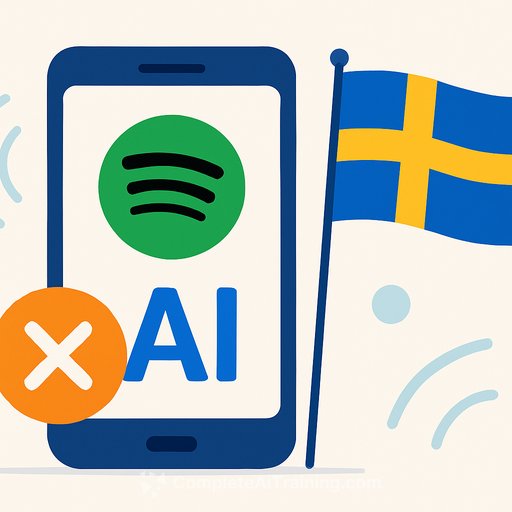
An acoustic folk-pop track that topped Sweden's Spotify rankings has been ruled ineligible for the country's official chart after it emerged the "artist" behind it was created with AI. The song, I Know, You're Not Mine (Jag Vet, Du Är Inte Min) by "Jacub," surged past 5m global streams, including about 200,000 in Sweden, before IFPI Sweden pulled it from Sverigetopplistan.
IFPI Sweden stated the track doesn't qualify under current rules. Their chief executive, Ludvig Werber, put it plainly: if a song is mainly AI-generated, it doesn't have the right to be on the top list.
The decision followed reporting that linked the track to Danish publisher Stellar, where two credited rights holders work in the company's AI department. Stellar acknowledged that Jacub's voice and parts of the music were generated with AI as a creative tool, while stressing human direction, time, and craft behind the release-and distancing themselves from low-effort "AI music slop."
Spotify doesn't currently require AI labels on tracks, though it has been removing AI spam because every 30-second play triggers a royalty and dilutes payouts to human artists. This isn't an isolated case: the AI "band" Velvet Sundown built a sizable audience before its artificial identity was exposed.
Composer and copyright campaigner Ed Newton-Rex argued this is exactly why mandatory AI labeling matters: listeners should know when they're hearing AI-generated work, and artists shouldn't lose streams or royalties to unlabeled synthetic acts. Meanwhile, a new industry disclosure framework for AI use is being developed by DDEX, though adoption on streaming platforms is voluntary right now.
Why this matters for creatives
- Eligibility is shifting: If your track is "mainly AI-generated," it may be excluded from charts and possibly awards. Know how gatekeepers define "mainly."
- Audience trust is on the line: Hidden AI use can backfire. Clear credits can build loyalty even if you use AI as part of your workflow.
- Money flows follow policy: Platforms are purging spam and rethinking payouts. Low-effort output won't sustain revenue or reputation.
- Rights and likeness issues are real: Training data, cloned vocals, and visual identity can trigger legal and ethical problems if you're not careful.
- Positioning matters: There's a difference between "AI-assisted" and "AI-fronted." Be explicit about where your work sits.
What to do next
- Adopt an AI disclosure line now: "This track uses AI-assisted elements for [backing vocals/sound design], directed, edited, and performed by [artist/producer]." Keep it short and consistent.
- Upgrade your metadata: Capture who did what, which models were used, and where AI appears. Track stems, session files, and timestamps. Align fields with DDEX guidance so you're future-proof.
- Credit like a pro: List human writers, performers, producers, plus AI model roles (e.g., "AI voice model for harmonies"). Clarity beats controversy later.
- Contract for AI: Add clauses covering AI training on your work, voice likeness use, and disclosure obligations for collaborators and publishers.
- Quality control: If you use AI vocals or instruments, invest time in editing, comping, and human performance layers so the record feels intentional-not generic.
- Release strategy: Consider separate artist projects for fully synthetic acts vs. your main artist identity. Don't make your core brand carry disclosure risk.
- Policy watch: Keep an eye on chart rules and platform updates. Voluntary AI labels can become requirements overnight.
The bigger picture
This case isn't about banning AI. It's about clarity on authorship and fair payouts. If the human craft is there, show it. If AI is doing the heavy lifting, say it-and accept the trade-offs that come with that choice.
The artists who win from here will do two things well: make great songs and communicate their process with zero ambiguity. That's how you keep fans, qualify for charts, and stay on the right side of policy shifts.
Resource
- Get up to speed on practical AI skills and workflows for creatives: Complete AI Training - Courses by Job
Your membership also unlocks: