
AI news ·
Trademark attorney warns AI naming generators skip trademark checks
No AI brand name generator checks trademark databases, so names risk infringement and costly rebranding. Legal review before launch prevents rebranding costs.
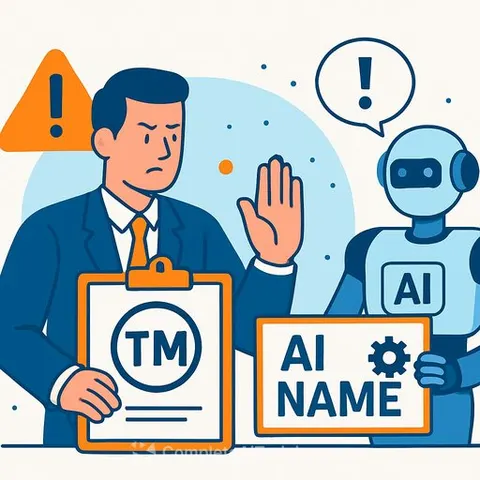
Indie Law warned on July 4, 2026 that AI-generated brand names create trademark risk because no available generator checks whether a name is legally clear. Attorney Joey Vitale said the tools can produce names quickly, but "cannot tell whether a name is already trademarked or too similar to protect." For legal practitioners, the issue is one of workflow design: automated naming widens the idea pool, but launch decisions still require clearance against registered marks, pending applications, and common-law usage before any brand asset hardens.
What happened
In a PRWeb release, Indie Law cautioned founders and product teams that AI generators do not screen the USPTO database or unregistered usage. The release quotes Vitale emphasizing that generation and clearance are separate steps. The core message is not that AI brainstorming is dangerous, but that adopting an AI-suggested name without a legal review gate exposes a business to infringement claims and rebranding costs.
Policy context
The warning comes from a law firm, not a regulator. It is practical legal advice rather than an agency action. However, it aligns with USPTO's trademark basics: protection turns on source identification and actual use in commerce, not on whether a name sounded original when a model produced it. The USPTO does not pre-approve marks generated by AI, and the legal test for confusion remains the same regardless of the name's origin.
Practitioner takeaways
Teams embedding naming assistants should make the product boundary explicit. AI can propose candidates, cluster themes, or check internal naming rules, but clearance must run through searches of registered marks, pending applications, similar marks, domains, and likely market confusion before launch work starts. The useful lesson is to treat AI naming as ideation, not clearance.
Product, marketing, and legal teams need a review gate before domains, packaging, paid media, or customer-facing product names finalize. The warning echoes ongoing conversations in AI for Legal circles about the limits of automated tools in compliance-heavy fields.
What to watch
The next practical layer would be tooling that connects name generation to trademark screening and records the review trail. Until then, the safest operational pattern is simple: generate many options, shortlist manually, then run clearance before committing spend to media, packaging, domains, or product assets.
Why this matters for legal professionals
In-house and outside counsel advising startups or product teams should update their IP checklists to treat AI-generated names as raw input that always requires a separate clearance step. The volume of names a client can produce with AI may be higher, but the legal analysis does not change. The earliest point to insert that review is before any irreversible brand investment, because once a name appears on packaging or in paid campaigns, the cost of changing it multiplies.