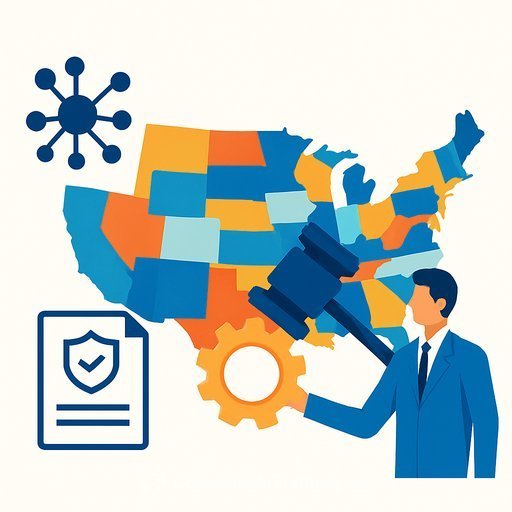
Texas' TRAIGA Is Live: What Dev and IT Teams Need to Do Now
AI laws are catching up, and Texas just set a new baseline. The Texas Responsible Artificial Intelligence Governance Act (TRAIGA) took effect on January 1, 2026. If you build, buy, or deploy AI that touches Texas users or customers, this applies to you-even if your team isn't based in Texas.
TRAIGA isn't a risk-scoring model. It's intent-based, and it targets both development and deployment. That means model teams, product, MLOps, and IT all share responsibility.
Scope: Who's Covered and What Counts as "AI"
TRAIGA applies to any person or entity doing business in Texas or with Texans. The statute defines AI systems broadly: any machine-based system that infers from inputs to generate outputs-content, decisions, predictions, or recommendations-that can influence physical or virtual environments.
Development and deployment are both in scope. Using a third-party model does not shield you if your product behavior falls under the law.
What TRAIGA Prohibits
- Developing or deploying an AI system with the intent to manipulate human behavior to incite or encourage self-harm, harm to others, or criminal activity.
- Developing or deploying an AI system with the sole intent to infringe, restrict, or impair rights guaranteed under the Constitution.
- Developing or deploying an AI system with the intent to unlawfully discriminate against a protected class in violation of state or federal law.
- Developing or deploying an AI system with the sole intent of producing or distributing certain sexually explicit content.
Note the emphasis on intent. Your policies, design decisions, logs, and reviews will be key to showing what you meant the system to do-and what you actively prevented.
Enforcement: How It's Policed
- Enforced only by the Texas Attorney General; no private right of action.
- Notice and opportunity to cure before action is filed.
- Penalties: $10,000 to $200,000 per violation (depending in part on whether the violation is "curable"), or $2,000 to $40,000 per day for continued violations.
Governance Add-Ons: AI Counsel and 36-Month Sandbox
TRAIGA sets up an AI Counsel to provide oversight and guidance. It also creates a regulatory sandbox that lets companies test AI systems for up to 36 months with certain prosecution protections. If you're planning high-impact features, this sandbox may reduce risk while you validate controls in a controlled environment.
How Texas Compares
- Colorado (CAIA): Risk-based regime with impact assessments, risk management, and consumer notices-more process heavy than TRAIGA. See the Colorado AI Act summary bill page: SB24-205.
- Utah: Focuses on consumer notification and deceptive practices-narrower scope.
- California: Targeted rules for specific use cases (e.g., chatbots, elections, deepfakes)-less unified than Texas.
Practical Steps for Engineering, Product, and IT
1) Map Your Texas Exposure
- Inventory AI systems developed, offered, or deployed in Texas or serving Texas users.
- Include internal tools that affect users indirectly (e.g., fraud models, trust and safety systems, content moderation).
2) Update Policies and Technical Guardrails
- Explicitly ban uses that manipulate self-harm/violence/crime, intentionally discriminate, impair constitutional rights, or create certain sexually explicit content.
- Bake these bans into product requirements, PRDs, and model cards.
- Add input/output filters and abuse classifiers to block prohibited content and prompts.
- Use intent signals: friction, confirmations, or human review for sensitive flows.
- Log decisions tied to safety interventions to evidence intent and prevention.
3) Strengthen Model and Data Controls
- Document dataset sources; exclude data that could drive discriminatory outputs.
- Run regular bias tests and scenario tests for protected classes and sensitive outcomes.
- Add rate limits, content caps, and abuse throttles to reduce misuse.
- Version models and safety configs; require approvals for safety rule changes.
4) Build an Intent Trail
- Keep a clear record of intended use, known risks, mitigations, and red teaming results.
- Maintain audit logs for prompts, outputs, interventions, and user reports.
- Tie releases to a sign-off process that checks TRAIGA prohibitions before launch.
5) Vendor and API Management
- Add TRAIGA clauses to supplier contracts covering prohibited uses and logging.
- Require safety capabilities (filters, abuse detection, human-in-the-loop options) from AI vendors.
- Monitor vendor model changes that could affect your safety posture.
6) Consider the Texas Sandbox
- Use it for higher-risk features while you validate controls at production scale.
- Define entry/exit criteria, metrics, and reporting so you can show good-faith efforts.
Team-Specific Quick Wins
- Product: Add "Prohibited Uses" to every PRD and go/no-go checklist.
- Engineering: Implement content filters and policy checks at pre-prompt and post-generation stages.
- MLOps: Automate safety config rollouts with canaries and rollback plans.
- Security/Privacy: Align data access, retention, and incident response with AI logging needs.
- Legal/Compliance: Define what counts as "curable," set a cure playbook, and rehearse it.
Useful References
- Colorado AI Act (risk-based approach): SB24-205
- NIST AI Risk Management Framework (for testing and controls): NIST AI RMF
Upskill Your Team
If your org needs repeatable processes for safe AI development and deployment, explore role-based learning paths here: Complete AI Training - Courses by Job. For compliance teams, consider the AI Learning Path for Regulatory Affairs Specialists, and for IT leaders see AI Governance for CIOs.
Your membership also unlocks: