Trump Administration Backs Court-Led Approach on AI Copyright, Proposes Voice and Likeness Protections
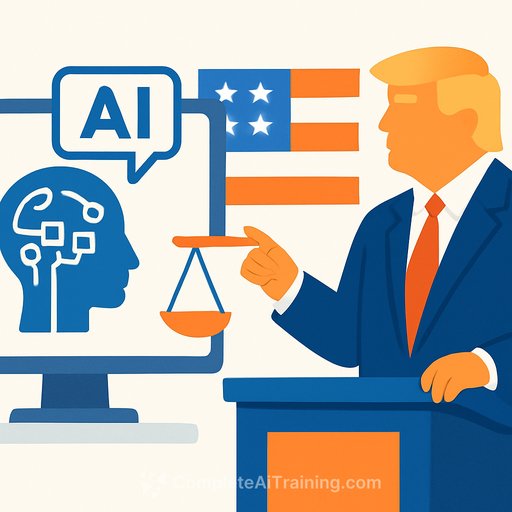
The Trump Administration released a national AI policy framework that directs Congress to let courts decide whether training AI models on copyrighted material constitutes fair use, rather than legislating the issue directly. The framework, released in March 2026, outlines the Administration's positions on copyright, digital replicas, state regulation, and federal oversight.
The Administration acknowledged competing viewpoints on whether AI training infringes copyright but said courts are the appropriate venue to resolve the dispute. It directed Congress to avoid actions that would impede judicial review of fair use claims.
What Congress Should Do Instead
Rather than settle copyright questions legislatively, Congress should create licensing frameworks and collective rights systems that allow copyright holders to negotiate compensation from AI providers without triggering antitrust concerns, the Administration said.
The Administration also asked Congress to establish federal protections against unauthorized commercial use of AI-generated replicas of people's voices, likenesses, and other identifiable attributes. The framework carves out exceptions for parody, satire, news reporting, and other First Amendment-protected speech.
Congress should also establish regulatory sandboxes to foster AI development and deployment, the Administration said. It cautioned against creating a new federal AI regulator, preferring instead that existing agencies with subject matter expertise oversee sector-specific applications.
Federal Standards Over State Patchwork
The Administration wants Congress to preempt state AI laws that create undue burdens, establishing a national standard rather than what it called a "fragmented patchwork of state regulations."
The framework preserves certain state powers: enforcing laws of general applicability against AI developers and users, zoning laws for AI infrastructure, and requirements governing states' own use of AI through procurement or services.
The Administration stated that states should not regulate AI development itself, calling it "an inherently interstate phenomenon with key foreign policy and national security implications." States also should not burden lawful AI use or penalize developers for how third parties misuse their models.
For management teams navigating these changes, understanding the federal-state split and copyright landscape will be critical. AI for Executives & Strategy covers how to plan for regulatory environments and policy shifts. AI for Legal addresses compliance frameworks and copyright implications in detail.
Your membership also unlocks: