Trump Executive Order 14365: What Employers Need to Know About AI Regulation
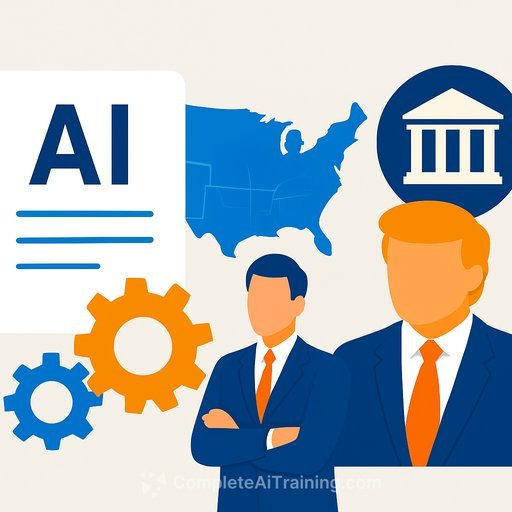
President Trump signed Executive Order 14365 on December 11, 2025, establishing a federal policy to limit state AI regulations. The order directs multiple agencies to challenge what the administration calls "excessive state regulation" and develop a uniform national framework.
The executive order does not immediately invalidate existing state AI laws. Instead, it creates a process to discourage, challenge, and potentially preempt them. However, most agencies have missed their deadlines for taking action, leaving the regulatory landscape unsettled.
What the Executive Order Requires
The order assigns specific tasks to federal agencies:
- The White House AI advisors must prepare legislative recommendations for a uniform federal framework. They published the "National Policy Framework for Artificial Intelligence" on March 20, 2026, recommending that Congress preempt state laws imposing "undue burdens."
- The Attorney General must establish an "AI Litigation Task Force" to challenge state AI laws. The task force was formally created on January 9, 2026, but has not yet filed litigation against any state law.
- The Secretary of Commerce must evaluate existing state AI laws and identify those conflicting with federal policy. This evaluation was due March 11, 2026, but has not been released publicly.
- The Secretary of Commerce must issue conditions for state eligibility under the Broadband Equity Access and Deployment Program, potentially denying funding to states with "onerous" AI laws. This policy notice was also due March 11, 2026, and remains unpublished.
- Federal agencies must assess whether grant conditions can require states to avoid or not enforce conflicting AI laws.
- The Federal Communications Commission must initiate a proceeding on federal AI reporting standards that would preempt state requirements. No proceeding has begun.
- The Federal Trade Commission must issue a policy statement explaining when state laws requiring AI model output alterations conflict with federal law. No statement has been issued.
Current Status: Widespread Delays
As of April 2026, most agencies have missed their March 11 deadline. The Secretary of Commerce's evaluation and policy notice remain unpublished. The FCC and FTC have not acted. Only the Attorney General's task force has formally launched, though without initiating litigation.
This creates uncertainty for employers navigating the regulatory environment.
What Employers Should Do Now
Continue complying with existing state and local AI laws covering hiring decisions, algorithmic bias, and disclosure requirements. These laws remain in effect.
Monitor federal developments closely. If the executive order initiatives proceed, expect legal challenges to state regulations and potential federal preemption. Court battles could take years to resolve, creating periods of conflicting requirements.
The potential outcome-a single federal standard-could eventually simplify compliance. But employers should prepare for short-term instability as the legal framework shifts.
For guidance on AI compliance obligations, AI for Legal professionals and AI for Executives & Strategy resources can help your organization understand both current requirements and emerging federal policy.
Your membership also unlocks: