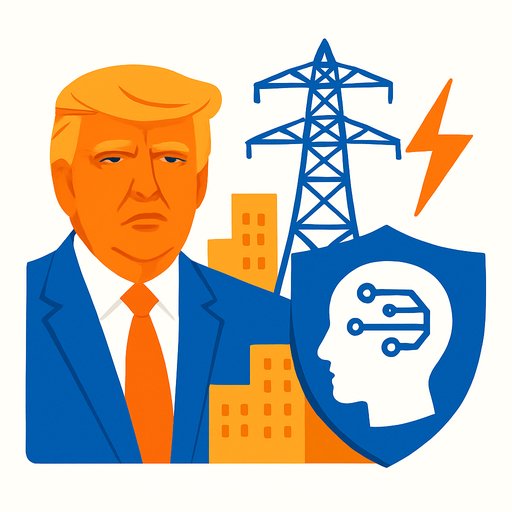
Trump and States Aim to Stop A.I. From Inflating Energy Bills
The administration said it will work with states to keep A.I.-driven data center growth from pushing higher electricity costs onto households. The plan: press PJM - the country's largest grid operator - to cut deals with major tech companies so they cover the cost of new grid capacity, not everyday customers.
Electricity demand is climbing fast as companies race to build data centers for artificial intelligence. That demand is showing up on bills: the average electricity bill rose about 5 percent in October compared with a year earlier, according to the Energy Information Administration.
What's Driving the Spike
Modern A.I. systems run on dense clusters of servers that draw steady, heavy loads - often comparable to small cities. Utilities and grid operators must add generation, transmission, and substation capacity to serve these facilities, and those upgrades are expensive.
Without clear cost-sharing rules, those expenses can flow into general rates. That's why federal officials say they'll coordinate with states and PJM to make sure large corporate customers finance the build-out they require.
Energy Information Administration: electricity use and bills
PJM: who they are and what they manage
What the Federal Push Could Mean
If successful, PJM would negotiate agreements with companies like Facebook, Google, and OpenAI to fund grid upgrades tied to their projects. Expect a sharper focus on who pays for interconnection upgrades, how costs are allocated across rate classes, and whether new large-load tariffs are warranted.
States will still make key calls through their public utility commissions (PUCs): approving tariffs, siting infrastructure, and setting customer protections. The federal stance gives cover - and urgency - to move fast.
Actions State and Local Officials Can Take Now
- Adopt "participant funding" for large loads: Require data center developers to pay for grid upgrades driven by their projects.
- Create dedicated large-load tariffs: Price service based on location, peak demand, and reliability needs to avoid shifting costs to residential customers.
- Speed interconnection with clear milestones: Set timelines and penalties to keep projects from clogging the queue and inflating costs.
- Steer siting to strong grid locations: Prioritize areas with existing capacity, access to transmission, and community support.
- Use time-based and coincident-peak rates: Encourage load to move off peak and reduce expensive capacity additions.
- Set efficiency and heat management standards: Improve data center power usage effectiveness (PUE) and address water use and thermal impacts.
- Pair with new generation and storage: Require firm supply plans (e.g., long-term contracts, storage) that match expected load profiles.
- Protect low-income customers: Expand bill credits and affordability programs so rate hikes don't hit vulnerable households.
- Secure community benefits: Negotiate tax agreements, workforce development, and infrastructure improvements for host communities.
- Increase transparency: Publish load forecasts, upgrade needs, and cost-allocation details in plain language.
What Agencies Should Watch Next
- PJM negotiations: Terms for who pays, where capacity will be added, and how fast projects move.
- FERC guidance and filings: Any rulings on cost allocation and interconnection policy that affect state authority and timing.
- Utility rate cases: Requests to recover transmission, generation, and substation costs linked to data center growth.
- Supply chain constraints: Transformers, switchgear, and skilled labor availability that could drive costs higher.
- Local impacts: Traffic, water, noise, and emergency services - issues that shape public support.
Quick Briefing for Public Officials
- The issue: A.I. data centers are adding large, constant load; without policy action, costs can fall on households.
- The federal stance: Work with states and PJM to shift upgrade costs to the tech firms that trigger them.
- The near-term move: Use targeted tariffs, participant funding, and better siting to control rates while keeping projects on schedule.
- The metric to track: Residential bills and peak demand; October bills rose ~5% year-over-year per EIA.
The bottom line for government leaders: set clear rules now. If big loads pay for the upgrades they need, you can support growth in A.I. infrastructure without sending residents a bigger bill.
Your membership also unlocks: