Trump Appoints Tech Leaders to AI Advisory Council
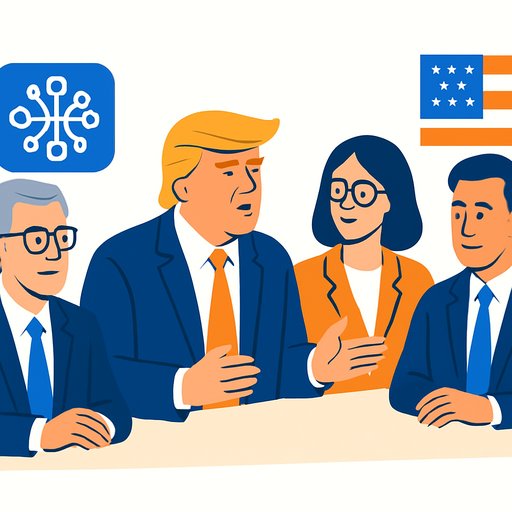
The White House has appointed five major technology executives to the President's Council of Advisors on Science and Technology, signaling closer coordination between the administration and Big Tech on artificial intelligence policy.
Nvidia CEO Jensen Huang, Meta chief Mark Zuckerberg, Oracle Executive Chairman Larry Ellison, Google co-founder Sergey Brin, and AMD CEO Lisa Su are among 13 initial appointees to PCAST, which advises the executive branch on science and technology matters. The council will eventually expand to 24 members.
David Sacks, the White House lead for artificial intelligence and cryptocurrencies, and technology advisor Michael Kratsios will co-chair the group. The administration frames the council as essential to maintaining U.S. leadership in AI amid competition from China.
What This Means for Strategy
The appointments reflect a direct channel between corporate leadership and policy decisions. Tech companies have historically influenced regulation through lobbying; this structure formalizes that relationship at the advisory level.
For executives, the composition matters. The council includes leaders from semiconductor manufacturing, cloud infrastructure, and consumer-facing AI platforms - the three sectors most critical to AI development at scale.
The companies involved have publicly welcomed the move, suggesting they expect it will remove regulatory friction and direct federal resources toward their competitive priorities.
The Strategic Context
U.S. policymakers view AI development as a national security issue. The council's focus on accelerating development rather than establishing guardrails indicates the administration's priority: speed over caution in the competition with China.
For business leaders, this signals where federal investment and policy support will flow. Companies aligned with this agenda may see expedited approvals for data center expansion, export controls that favor domestic players, or research funding.
Learn more about AI for Executives & Strategy to understand how these policy shifts affect organizational decision-making.
Your membership also unlocks: