Trump Appoints Tech CEOs to AI Policy Council
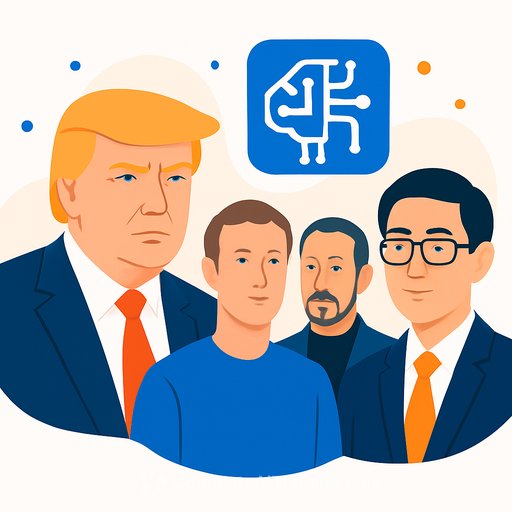
President Donald Trump has named Mark Zuckerberg, Larry Ellison and Jensen Huang to the President's Council of Advisers on Science and Technology (PCAST), tasking them with shaping the government's approach to artificial intelligence.
The council will advise on AI development as the US competes with China's advances in the sector. David Sacks and Michael Kratsios, both former White House technology advisers, will serve as co-chairs.
The initial group includes 13 members from major tech companies. Google co-founder Sergey Brin and AMD CEO Lisa Su are also on the council. An executive order from January 2025 allows for up to 24 members total.
Why Now
Trump has made AI development central to his economic growth strategy. He called China's release of DeepSeek, a state-owned AI model, "a wake-up call for our industries."
The White House framed PCAST's work as ensuring "all Americans thrive in the Golden Age of Innovation" by addressing opportunities and challenges emerging technologies present to the workforce.
Tech companies are backing this push with capital. Microsoft, Alphabet, Google and Meta have collectively committed $650 billion to accelerate US technology development in 2026. Jensen Huang personally donated to the White House ballroom project, as did Meta.
A Shift in Approach
The council signals a change from Trump's first term, when he called for boycotts of Apple over privacy policies. This time, he is prioritizing collaboration with tech leaders over confrontation.
The Biden administration pursued antitrust cases against Meta, Google and Amazon. Trump's approach appears different: working with these companies rather than against them.
Tech leaders have pushed for lighter regulation, arguing strict rules could slow innovation. They point to breakthroughs like ChatGPT-4 and Google Gemini as products of experimentation. Yet they also acknowledge the need for guardrails around deepfakes, election interference and autonomous weapons.
The European Union's AI Act and China's state-directed approach have been viewed by US companies as restrictive. PCAST could shape a US framework that avoids those models.
For executives navigating AI strategy, understanding these policy shifts matters. The council's recommendations will likely influence everything from investment priorities to compliance requirements. Learn more about AI for Executives & Strategy or explore the AI Learning Path for CEOs.
Your membership also unlocks: