Trump signs executive order to curb state AI regulations
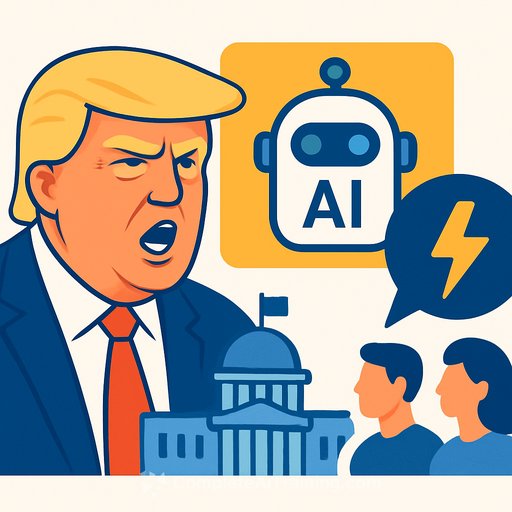
President Donald Trump signed an executive order on Thursday aimed at limiting state-level regulation of artificial intelligence. The move sets up a clash with several states that have begun building their own guardrails for AI across hiring, lending, health care, and more.
The White House framing: a single, lighter regulatory approach will help U.S. companies compete and avoid a patchwork of rules. Critics argue it shields large AI vendors from accountability and stretches executive power beyond its limits.
What states have done so far
Four states - Colorado, California, Utah, and Texas - have passed laws that set baseline rules for AI in the private sector. These include limits on certain data collection and transparency requirements when AI is used to make meaningful decisions about people.
The concerns are familiar to anyone working with models in hiring, finance, insurance, or care delivery: AI can encode bias and make errors that are hard to explain. "With a human, I can say, 'How did you come to that conclusion?' With an AI, I can't ask any of that," said Calli Schroeder of EPIC.
Beyond broad rules, many states are targeting specific risks: bans on election deepfakes, penalties for nonconsensual porn, and policies for how governments procure and use AI.
What the executive order does
The order tells federal agencies to identify "burdensome" state AI regulations and pressure states to stand down by threatening to withhold certain federal funds - including broadband dollars - or by challenging state laws in court.
It also begins work on a lighter-touch national framework that would preempt state AI laws. The order does not seek to override some areas, such as AI-related child safety protections and rules for how state governments buy and use AI.
The case from the White House: 50 different rulebooks slow growth and let China close the gap in AI. The president has also warned that state rules are producing what he calls "Woke AI."
Why critics are pushing back
Consumer advocates and tech reform groups argue the order creates "a vacuum of accountability" for large AI firms. "After spending millions of dollars on lobbying... Big Tech has successfully leveraged those around the president to pass a federal moratorium that aims to wipe out bipartisan AI safeguards," said Liana Keesing of Issue One.
Children's safety groups warn of repeat mistakes from the social media era. "A generation of parents watched their kids become the collateral damage of our failure to regulate social media, and now this moratorium threatens to repeat that tragedy with AI," said Shelby Knox of ParentsTogether Action.
Legal questions loom. Colorado's attorney general has signaled a lawsuit. California's Sen. Scott Wiener said, "If the Trump Administration tries to enforce this ridiculous order, we will see them in court." A bipartisan group of attorneys general previously urged Congress not to block state AI rules for a decade. And Shatorah Roberson of the Lawyers' Committee for Civil Rights Under Law argues a president cannot preempt state laws by executive order alone.
What this means for government, IT, and development teams
- State and local agencies: Map exposure to federal funding that could be targeted. Keep implementing existing state AI policies (procurement, impact assessments, disclosure) unless a court orders otherwise.
- Enterprises operating in multiple states: Do not unwind compliance. Maintain state-by-state controls for transparency, notice, and bias testing until preemption is finalized in law or upheld in court.
- Policy and legal teams: Prepare for parallel tracks - potential injunctions that pause enforcement, and a federal rulemaking that could take months. Track agency challenges to specific state laws.
- ML and engineering leads: Double down on model documentation, data lineage, decision logs, and bias audits. These artifacts support both state transparency rules and any future federal framework.
- Procurement and vendors: Add clauses that allow for fast updates if federal preemption arrives. Require vendors to provide risk assessments and mitigation plans for high-impact AI.
- Risk and compliance: Stand up an AI risk register for systems that affect employment, credit, housing, healthcare, and pricing. Include processes for human oversight and appeal.
What to watch next
Expect immediate legal challenges from states and potential motions to block enforcement. Agencies will start drafting the federal framework, likely with public comment periods and implementation timelines that stretch into next year.
If funding threats escalate, watch for congressional oversight and additional state resistance. Some states, including Connecticut, have indicated they plan to keep moving forward with broader AI rules regardless.
Resources
Your membership also unlocks: