US Government Moves to Centralize AI Regulation, Sidestepping States
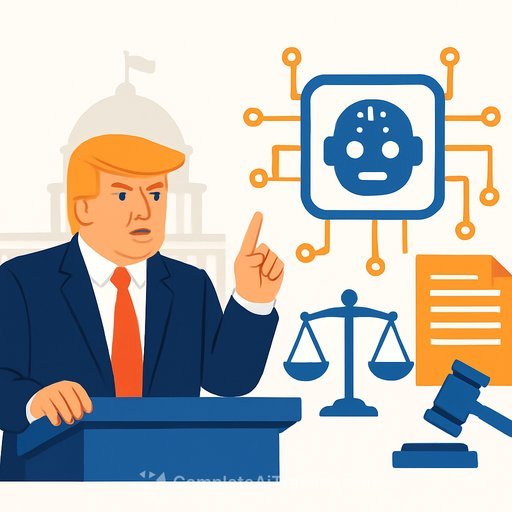
President Trump has initiated a push for nationwide AI regulation through a new decree. The move is a direct response to the growing number of state-level laws, which the administration views as a hindrance to innovation.
The core objective is to create a single, national framework for artificial intelligence. This would supersede individual state laws, creating a more predictable environment for AI developers. "AI manufacturers should not have to turn to '50 different states' first," Trump stated during a press conference.
Criticism of a "Patchwork" System
The decree criticizes the current "patchwork" of state regulations. This fragmented approach creates compliance challenges, particularly for startups and smaller companies that lack the resources to navigate dozens of different legal systems.
Some state laws also have effects beyond their own borders, forcing companies to apply the strictest standard to their products nationwide. AI advisor David Sacks pointed out that with over 1000 AI-related bills in discussion across states and more than 100 already passed, the situation "just doesn't make sense."
It's worth noting that these figures may include many laws focused on the internal use of AI by state agencies, rather than rules for private sector AI development.
State Laws Under Federal Scrutiny
A recent analysis by the International Association of Privacy Professionals (IAPP) identified seven major state laws in California, Colorado, Utah, and Texas that apply directly to private organizations, with another pending in New York.
The new decree does more than just halt the creation of new state-level AI laws. It also grants the administration authority to review existing state laws. Any regulation deemed to "slow down innovations" excessively could be challenged.
This policy is also positioned as a strategic move in the technology race with China. The administration argues that a unified national strategy eliminates the slow decision-making processes inherent in a fragmented regulatory system.
This builds on earlier actions, such as the repeal of Executive Order 14110 on inauguration day, which signaled a clear shift in focus toward "unleashing" innovation with fewer restrictions.
Your membership also unlocks: