Change and Release Management Is Now a Trust Strategy
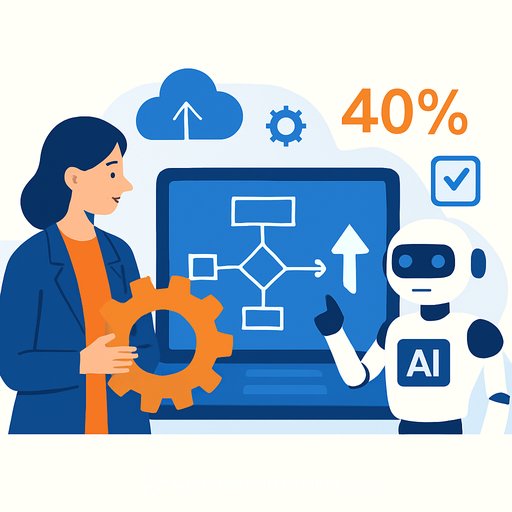
Compliance is table stakes. The real win is trust. AI-assisted rollouts are cutting downtime by up to 40%, and teams that treat change and release as trust systems are pulling ahead.
As AI adoption surges, companies are using it for transparency and reliability, not just speed. The move to hybrid tech stacks makes this shift urgent-employees, customers, and regulators expect fewer surprises and clearer accountability.
The Human-AI Trust Dynamic
AI can predict risks and personalize training, but the results only stick when humans validate the outputs. That means real oversight, clear escalation paths, and a culture where frontline experts can challenge the model.
Leaders who focus on engagement-town halls, visible pilots, clear "why now"-avoid the classic rollout whiplash. Hybrid environments amplify this need: plan the change at every level, from identity and data flows to service desks and comms.
Cutting Downtime With AI Precision
Practical play: let AI score releases for risk, simulate rollouts, and automate testing across on-prem and cloud. Feed it historical incidents and change records so it can flag weak spots before they cost you.
Use intelligent orchestration to schedule releases around capacity, dependencies, and user impact. Do this well and the 40% downtime reduction is realistic, not a slide claim.
- Predict: model failure points in pipelines and environments before change windows.
- Prevent: auto-generate tests, blast radius checks, and rollback plans.
- Prove: publish dashboards that show risk scores, confidence levels, and validations.
Skip the human side and you'll pay for it. Top-down AI deployments often trigger unease, force rehiring, and stall momentum. Make the workforce part of the loop from day one.
Hybrid Environments: What Breaks and How to Fix It
Mixed stacks create blind spots. AI helps with real-time insights and predictive analytics across release dashboards, but only if your data is clean and your service maps are current.
- Map dependencies across on-prem, cloud, and SaaS. Keep it living, not static.
- Unify telemetry. Correlate change events, incidents, and user experience signals.
- Pilot per domain. Start with a product line or critical service, then scale.
- Give managers AI literacy. The leaders who know workflows plus AI policy will set the pace.
Governance and Ethical AI Rollouts
Trust needs structure. Set roles, confidence thresholds, and validation paths before you let AI drive any change decision. Publish how the system works and where it can be challenged.
- Define guardrails: which decisions AI can automate vs. recommend vs. never touch.
- Add hybrid intelligence: pair AI agents with named human owners for sign-off.
- Log everything: prompts, models, versions, approvals, rollbacks, and outcomes.
- Bake compliance into pipelines: policy checks, separation of duties, audit trails.
- Keep testing live: ongoing tests during and after rollout, not a one-time gate.
Real-World Patterns and Metrics
Organizations with strong AI governance see faster adoption and lower resistance. In finance and other high-stakes sectors, AI-driven change has shortened release cycles while keeping audit teams happy.
Federated governance works: central IT sets standards and approved models; product teams tune policies and monitor local risk. Scale without losing control.
- Lead indicators: model confidence vs. human override rate, change success rate, mean time to detect risk.
- Lag indicators: downtime minutes per quarter, defect escape rate, audit findings, employee trust scores.
- Target: reduce change failure rate by 25-40% within two quarters.
Future-Proofing Your Playbook
AI features that launch fast and fade are expensive. Ship smaller, validate trust signals early, and iterate based on feedback from the people who run the process daily.
Use layered validation to protect critical workflows from manipulation. Treat model updates like code releases-versioned, tested, and reversible.
Strategic Imperatives for IT Leaders
- Set a trust goal for change: fewer surprises, clearer accountability, faster recoveries.
- Train managers and engineers on AI literacy, risk scores, and human-in-the-loop patterns.
- Stand up an explainability layer: plain-language reasons, data sources, and confidence for each AI recommendation.
- Run visible pilots with scorecards. Share results, including misses and fixes.
- Adopt a "root of trust" for data feeding change decisions. Verify sources before models touch them.
- Treat comms like a feature: who's impacted, what's changing, how to escalate, and how to roll back.
Emerging Trends to Watch
- AI "innovation ops" teams will handle more discovery and coordination work.
- Agentic systems will manage parts of release pipelines under human guardrails.
- Practitioner-led experiments will beat big-bang deployments every time.
90-Day Execution Plan
- Weeks 1-2: Audit change failure modes, map top services, and choose one pilot area. Define guardrails and approval roles.
- Weeks 3-6: Train pilot team, integrate AI risk scoring and test automation, publish a public release dashboard.
- Weeks 7-12: Expand to two more services, add layered validation, and report on downtime, failure rates, and override trends.
Helpful Resources
- Responsible AI principles (IBM)
- Global Survey on AI (McKinsey)
- AI courses by job role (Complete AI Training)
- Latest AI courses (Complete AI Training)
The takeaway is simple: treat change and release as trust systems powered by AI, not as checklists. Do that, and you'll cut downtime, lower resistance, and move faster without breaking faith with the people who keep the business running.
Your membership also unlocks: